By Segun Adeyanju
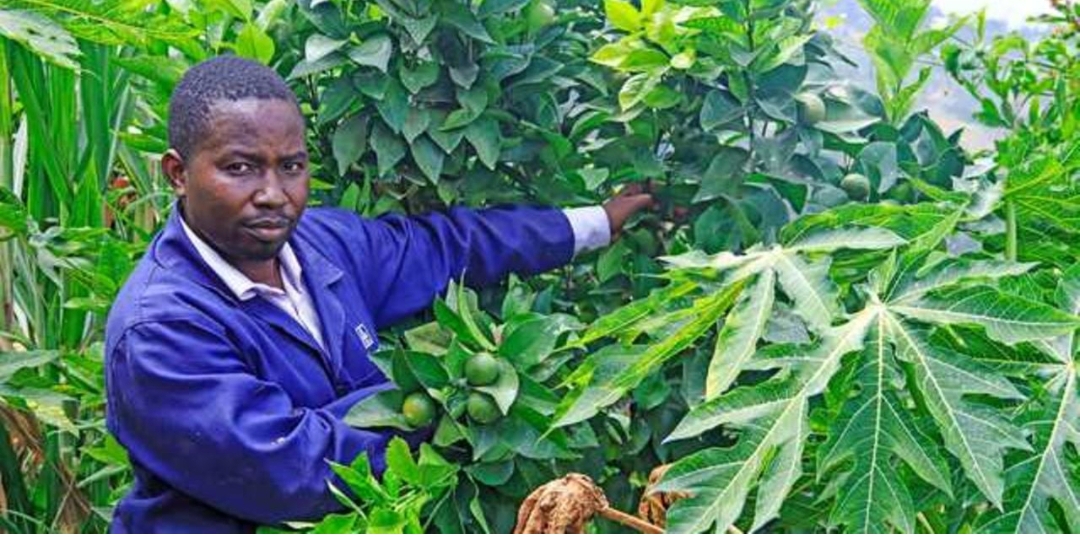
In the arid landscapes of Mbooni sub-county, where poor soils have driven many farmers out of agriculture, 34-year-old Martin Muoki is charting a new path.
The Jomo Kenyatta University of Agriculture and Technology graduate is using science and technology to restore degraded land and boost food production.
Muoki, founder of Farmers Senta Agrovet, turned to soil testing after repeated crop failures on his two-acre vegetable farm.
Working with the Kenya Agricultural and Livestock Research Organisation (KALRO), he identified nutrient deficiencies and bacterial challenges such as root rot and wilt, then developed customised remedies.
“Through soil analysis, we are able to recommend the right fertilisers and products that unlock nutrients and suppress harmful bacteria, making farming practical again,” Muoki said.
What began as a personal breakthrough has now grown into a network of more than 3,000 farmers across three wards in Mbooni, linked via phone and WhatsApp groups.
His model farm showcases integrated systems where biogas from cow dung powers irrigation, while azolla supports fish, poultry, and cattle production.
The approach has created six full-time jobs and weekly incomes for about 200 women who sell farm produce in local markets.
Experts say Muoki’s innovation is timely. According to the World Bank, over 65 percent of farmland in East Africa is degraded due to poor nutrient management, acidification, and erosion problems worsened by climate change.
Soil health, they stress, is central to tackling food insecurity.
For Mbooni’s farmers, Muoki’s soil-first approach is more than science. It is a lifeline restoring hope, productivity, and resilience in one of Kenya’s toughest farming environments.