The Qujing Culture Centre in Qujing City, China, stands as an architectural landmark, designed not just as a building but as a sanctuary for two of the nation’s most extraordinary ancient artefacts. Known as the ‘miracles.’
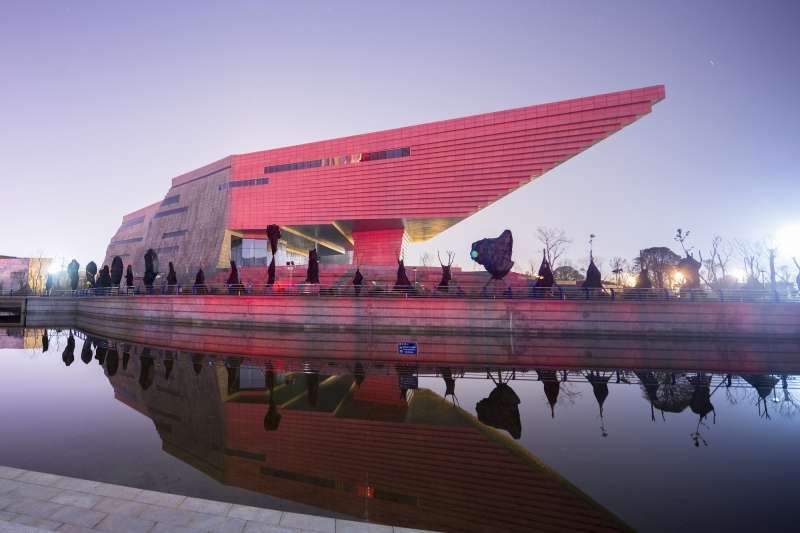
These artefacts—the Longyan Tablet and a 400-million-year-old fish fossil—demand a prestigious home, and the adjacent man-made lake provided the perfect backdrop for this ambitious project.
The significance of the Longyan Tablet, recognized as the first instance of a pivotal calligraphic style that influenced the development of calligraphy, and the remarkable fish fossil, which reshapes our understanding of both human history and the geological past, called for an equally exceptional architectural response.
This led to the commissioning of the Qujing Culture and Sport Center Building Commission to create a dedicated venue for these treasures.
Collaboration was key, with two prominent architectural firms, Atelier Alter and Hordor Architecture & Engineering Design Group, joining forces to bring this vision to life. Atelier Alter initiated the design process, while Hordor played a crucial role in refining the structure, pushing the boundaries of architectural creativity.
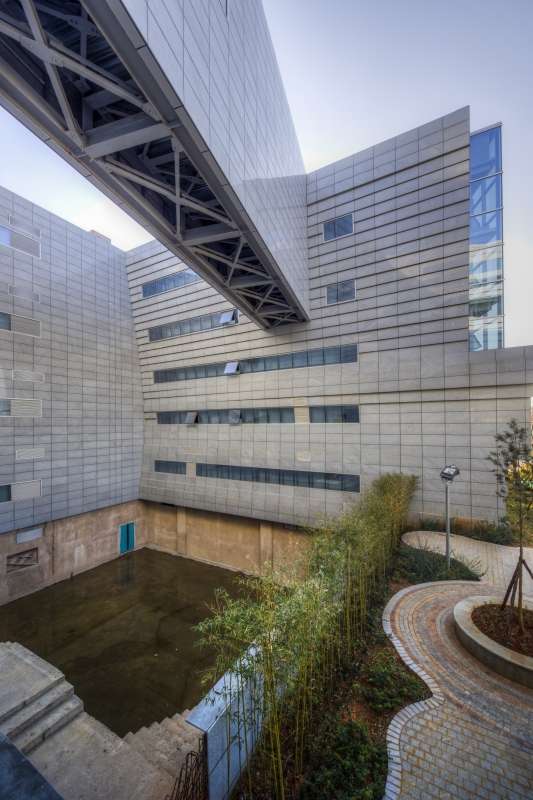
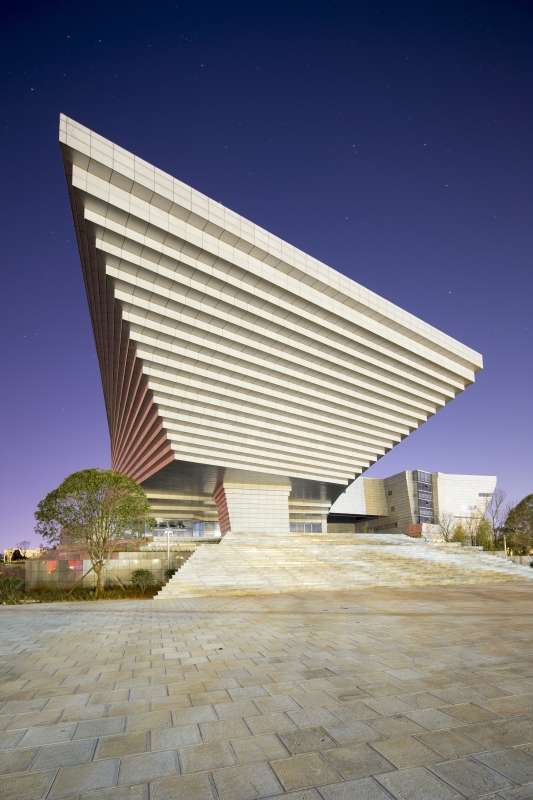
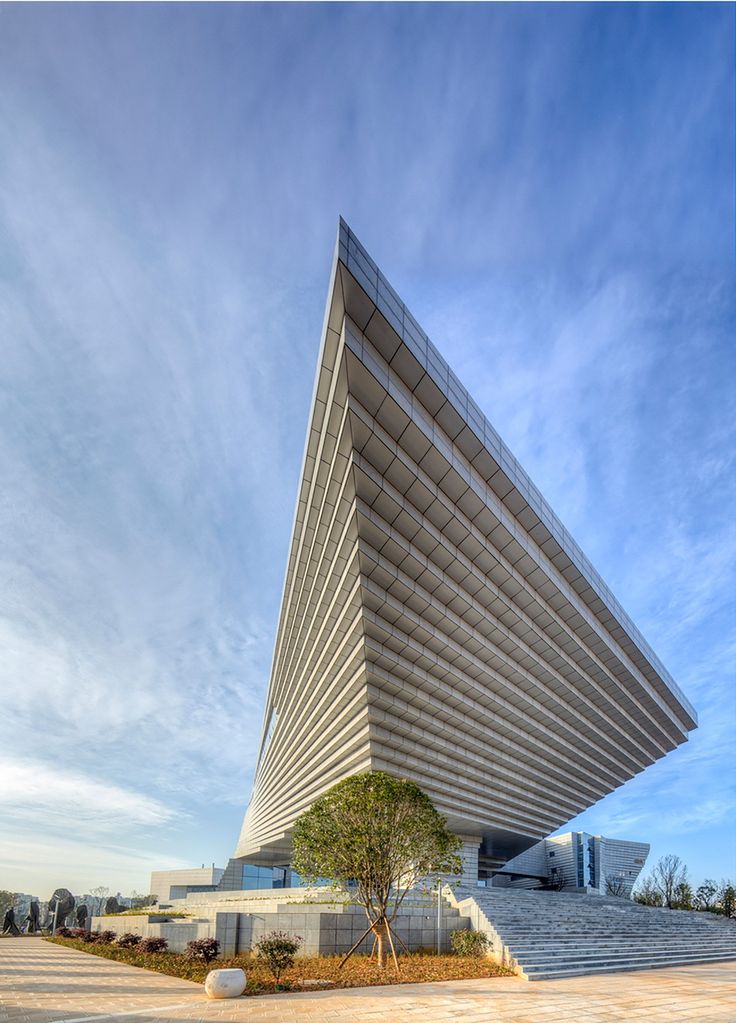
The result is a striking building characterized by a massive cantilevered roof that extends beyond the main structure, creating an expansive plaza that serves as both a gathering space and a point of entry.
As visitors approach, the imposing design reflects the importance of the artefacts housed within.
Upon entering, guests ascend a broad staircase leading to a raised concrete plaza, offering panoramic views of the surrounding lake.
The entrance leads further into an elevated platform, where the architectural ingenuity becomes apparent—the enormous concrete roof appears to defy gravity, floating overhead like an inverted staircase.
This dramatic design challenges conventional architectural norms, prompting questions about its structural support.
Advances in modern construction technology have made such ambitious designs feasible, akin to the remarkable cantilever seen in the CCTV headquarters by OMA.
The architects chose to focus on formal expression rather than drawing direct analogies from the site’s natural features or the artefacts themselves.
By selecting concrete as the primary material, they aimed to create a dialogue between solidity and abstraction, familiarity and novelty.
Project Details
– *Architects: Hordor Design Group, Atelier Alter
– Location: Qujing, China
– Client: Qujing Culture and Sport Center Building Commission
– Lead Architect: Yan Huang
– Design Architects: Yingfan Zhang, Xiaojun Bu
– Total Area: 18,800 sq. m
– Completion Year: 2015
– Photography: Atelier Alter
The Qujing Culture Centre is not just a structure; it’s a bold statement about the importance of heritage and modern architectural innovation, designed to inspire future generations.