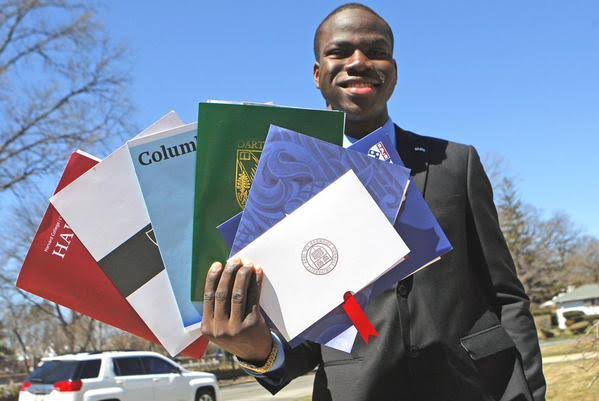
In 2015, 17-year-old Harold Ekeh accomplished what seemed almost impossible—he gained admission into all eight Ivy League universities.
His academic excellence didn’t stop there; out of the 13 elite schools he applied to, including MIT and Johns Hopkins, every single one extended an offer.
While many would have struggled with such a decision, Ekeh gravitated toward Yale, a choice influenced by the deep connections he formed with students there.
But his success wasn’t just about personal ambition. Even as a teenager, he displayed a strong sense of community by founding a college mentorship program to help other students navigate the complex university application process and secure placements in top institutions.
A Childhood Shaped by Change
Ekeh was born in Lagos, Nigeria, and spent his early years there before his family relocated to the United States when he was eight.
The transition was challenging. Adjusting to a new education system, particularly U.S. history classes, was difficult. At times, he questioned why his family had left their comfortable life in Nigeria. However, his parents reminded him that they had moved for one thing—greater opportunities.
With time, Ekeh embraced those opportunities, becoming the salutatorian of his high school with an astonishing 100.5% GPA.
Ironically, the subject he once struggled with—history—became one of his strongest. He eventually excelled in the AP History Exam, a testament to his resilience and ability to turn challenges into triumphs.
From Science to Policy: A Shift in Focus
Ekeh’s initial passion was in the sciences. He aspired to become a neurosurgeon and planned to major in neurobiology or chemistry.
His research on the effects of docosahexaenoic acid (DHA) on Alzheimer’s earned him national recognition as a 2015 Intel Science Talent Search semifinalist.
He vividly recalls rushing home to share his findings with his family, proud of the impact his research could have on the world.
However, once at Yale, Ekeh’s interests began to evolve. A summer fellowship with the Congressional Black Caucus exposed him to the complexities of healthcare policy, civil rights, and the legislative process.
One defining moment was learning about the weakening of the Voting Rights Act and how such policies disproportionately affected marginalized communities. This realization reshaped his career ambitions.
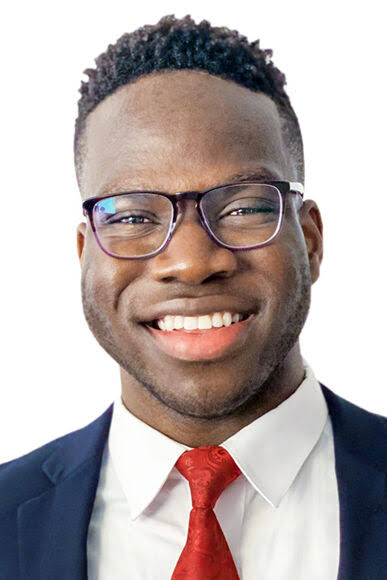
Championing Civic Engagement
In 2017, Ekeh co-founded Every Vote Counts (EVC), a nonpartisan, student-led initiative aimed at increasing voter participation and advocating for accessible elections.
The movement quickly expanded to over 50 college campuses, working to educate young voters and push for pro-democracy reforms.
His activism gained national recognition, with his writings on voting rights and policy featured in publications like *The Washington Post, BuzzFeed News, The Hill,* and *Real Clear Policy.* Major media outlets, including *The New York Times Editorial Board, The Wall Street Journal,* and *USA Today,* have cited his work, amplifying his influence in policy discussions.
Today, Ekeh serves as a special assistant to the president at the Brennan Center for Justice, where he contributes to legal and policy efforts that safeguard voting rights.
His journey—from an immigrant student striving for academic excellence to a national advocate for democracy—reflects not just personal success but a deep-seated commitment to empowering others.