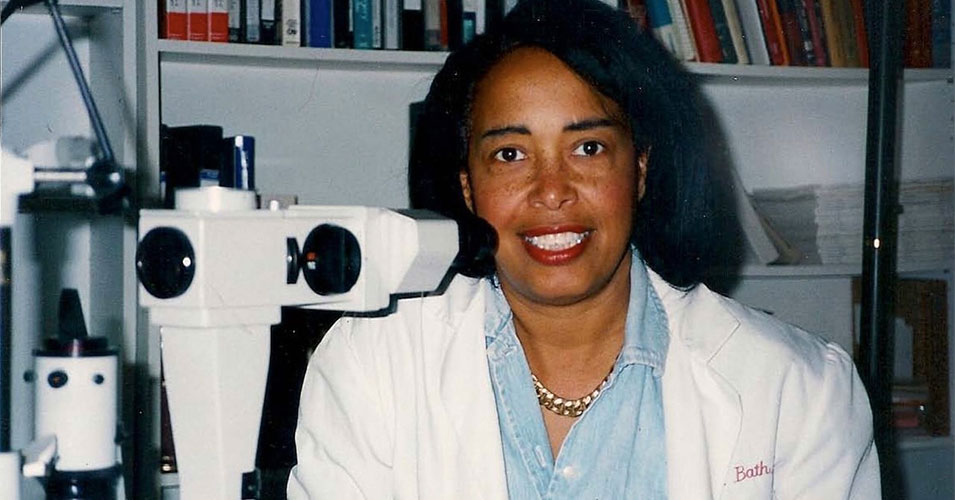
Resilience and creativity are demonstrated by Dr. Patricia Bath’s journey from Harlem to becoming a pioneering ophthalmologist. Bath was born in 1942, and because of her early interest in science, she graduated from Howard University in 1968 with a medical degree.
She was the first woman to head an ophthalmic post-graduate training program in the United States and the first African American to finish an ophthalmology residency at New York University, breaking several racial and gender stereotypes.
The Invention of the Laserphaco Probe

In 1986, Dr. Bath created the Laserphaco Probe, a tool that treats cataracts more accurately and minimally invasively than conventional techniques by using laser technology.
Patients who had been blind for decades were able to regain their vision and heal more quickly thanks to this invention. She was the first female African American physician to be granted a medical patent for this innovative gadget in 1988.
READ ALSO: Meet Frederick McKinley Jones: The Inventor Who Revolutionised Refrigerated Transport
Advocating for Eye Health Equity
Recognising inequities in eye care, Dr. Bath co-founded the American Institute for the Prevention of Blindness in 1976. She championed “community ophthalmology,” a profession integrating public health and therapeutic care to eliminate preventable blindness, particularly in impoverished populations. One of the main points of her work was that “eyesight is a basic human right.”
Legacy and Recognition
Many people are aware of Dr. Bath’s contributions to both medicine and society. She became one of the first Black women to be admitted into the National Inventors Hall of Fame in 2022 after her death. Future generations in the domains of social justice, science, and medicine are still motivated by her legacy.