Aliko Dangote, President and Chief Executive of Dangote Industries Limited, has renewed his call for African business leaders, entrepreneurs, and wealthy citizens to channel their resources into developing the continent from within.
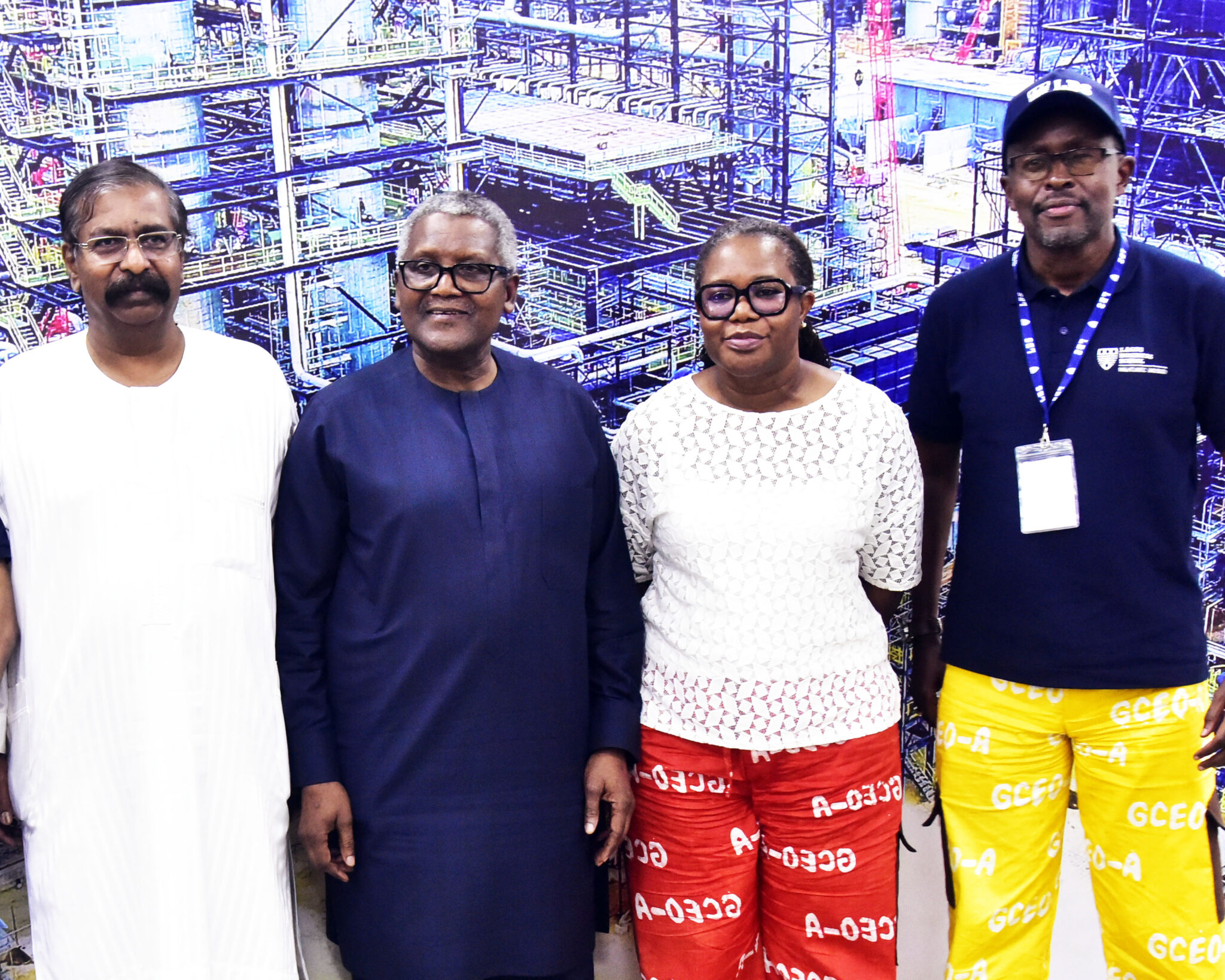
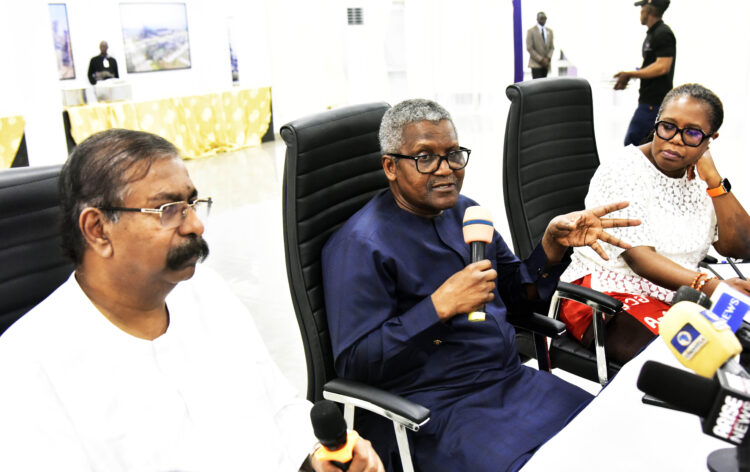
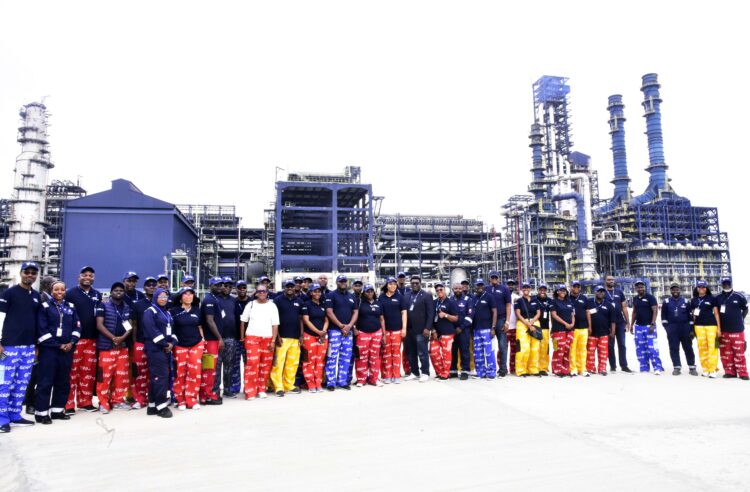
Dangote made the remarks in Lagos while hosting participants of the Global CEO Africa Programme — an initiative run jointly by Lagos Business School and Strathmore Business School, Nairobi. After a tour of the Dangote Petroleum Refinery & Petrochemicals in Ibeju-Lekki, he shared insights on how large-scale local investments can unlock Africa’s full economic potential.
Dangote underlined that Africa’s transformation requires bold ideas and large projects capable of solving enduring challenges. Pointing to the Dangote Petroleum Refinery — the world’s largest single-train refinery — he described its completion as proof that African businesses can achieve globally significant feats through persistence and vision.
“There will always be challenges. In fact, life without challenges isn’t exciting. You just hope for the kind of challenges you can overcome—not the ones that overwhelm you,” he remarked.
He added that the refinery’s success has emboldened the group to set its sights even higher: “Now that we’ve built this refinery, we believe we can do anything. We aim to make our fertiliser company the largest in the world—and we’ve set ourselves a 40-month timeline.”
Beyond resources, Dangote stressed the need for African business leaders to take the lead in job creation, investing their capital locally rather than moving it overseas.
“We, as Africans, must stop taking our money abroad. We should invest it here to build our countries and the continent. As for me, I don’t take my money out of Africa. If we don’t show confidence in our own economies and leadership, foreign investors certainly won’t. After all, we know our leaders better than anyone else. That money being taken out of the continent should be left here, where it can benefit everyone,” he advised.
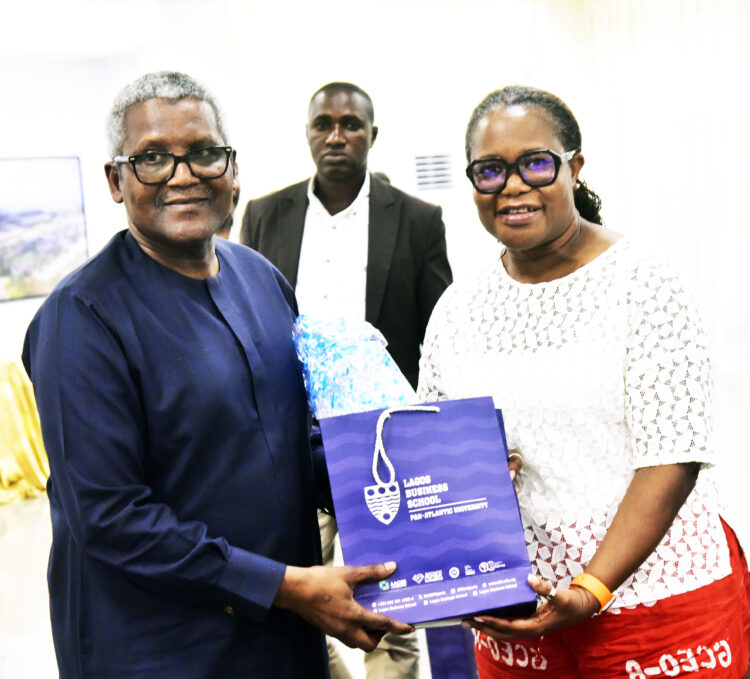
Dangote reflected on how nations like Dubai and Singapore pulled far ahead of African peers through deliberate industrial policies and strong local partnerships with visionary entrepreneurs. He lamented that while Africa has gained political freedom, economic independence is still a work in progress.
Highlighting the continent’s huge workforce and abundant natural resources, he warned that these advantages would be wasted if job opportunities do not keep pace with population growth. He also called for strong banking systems, advanced manufacturing capacity, and a revitalised agricultural base to anchor sustainable development.
He pointed out the inefficiency of weak regional trade links, revealing: “it is currently cheaper to import goods from Spain than to transport cement clinker from Nigeria to neighbouring Ghana.”
Despite Africa’s infrastructure gaps and policy inconsistencies, Dangote urged the 24 CEOs — drawn from six African countries — to dream big and push boundaries in their respective industries.
“If you think small, you don’t grow. If you think big, you grow. It’s better to try and fail than never to try at all,” he told them.
Patrick Akinwuntan, Academic Director of the Global CEO Africa Programme at Lagos Business School, explained that the programme is designed to prepare Africa’s next generation of CEOs to see the continent as a single economic bloc bursting with opportunity.
“The goal is to nurture business leaders who see Africa as a single market—one without borders—focused on the continent’s vast potential. The refinery is a powerful symbol that vision goes beyond mere sight,” he said.
Akinwuntan, who previously served as Managing Director of Ecobank Nigeria, commended Dangote for his integrity, leadership, and unwavering drive to tackle complex, large-scale projects.
Dr Caesar Mwangi, Executive Dean of Strathmore Business School, also praised the refinery project as living proof of what African-led businesses can accomplish.
“This refinery is the world’s largest single-train refinery. It’s proof that we must dream big, think big, and—most importantly—act. If the Dangote Group can achieve this, then so can others across the continent,” Mwangi said.
“Every CEO here can take this inspiration back home and initiate impactful projects that will uplift our continent and create opportunities for the millions of young Africans who need them,” he added.
Professor Olayinka David-West, Dean of Lagos Business School, noted that the visit perfectly aligns with the school’s mission to produce leaders capable of tackling Africa’s institutional and societal challenges.
She described Dangote as a model of visionary leadership who knows how to marshal capital and talent to address urgent continental problems.
“This facility is pivotal. It serves as a practical tool to implement frameworks like the African Continental Free Trade Area (AfCFTA). While it’s one project, its effects will be felt across multiple sectors,” she explained.
Dr Rabiu Olowo, CEO of Nigeria’s Financial Reporting Council and one of the programme participants, described the visit as a timely reminder that transformative national growth requires courageous ideas and bold investments.
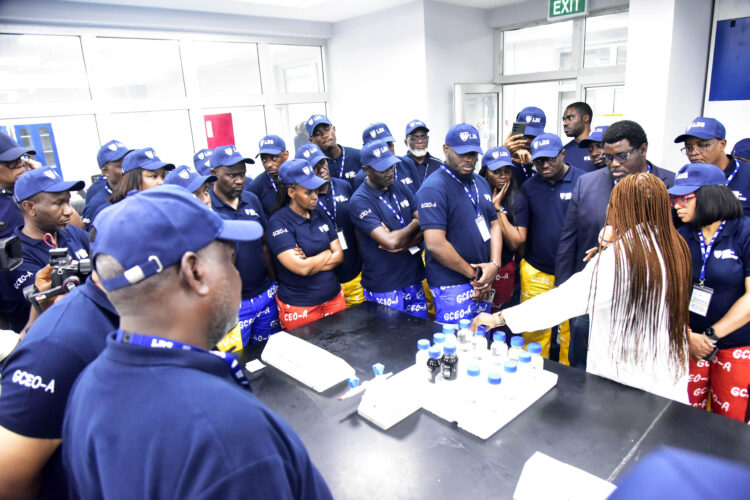
Other CEOs present included Segun Aina, a renowned global banking figure; Nancy Njau, Managing Director of Family Bank, Nairobi; Emmanuel Wakili, Executive Director and Chief Financial Officer for Cameroon, CEMAC, and CESA Region at Ecobank; and Ibukun Oyedeji, former President of the CFA Society Nigeria, among others.