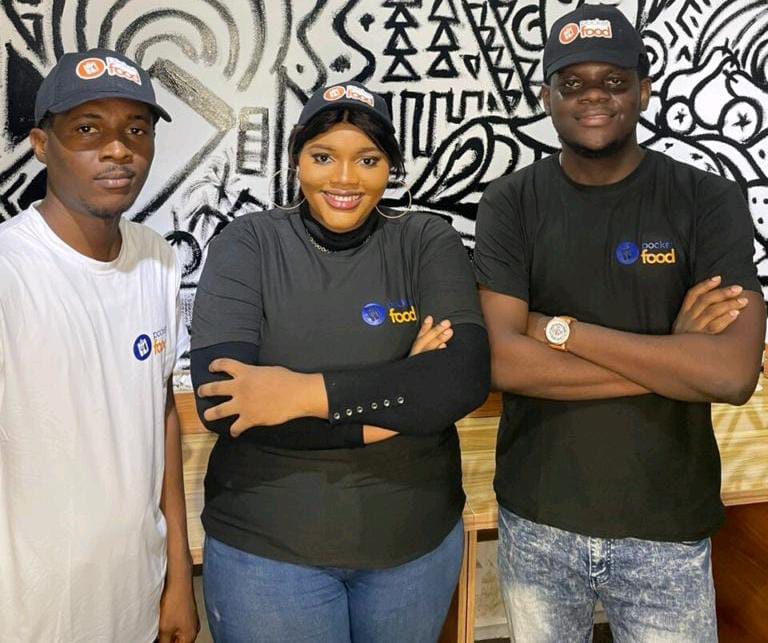
By Segun Adeyanju
Pocketfood, a Lagos-based foodtech startup founded by Omolara Olarerin, has survived Nigeria’s harsh economic downturn after a strategic pivot from individual subscriptions to a business-to-business (B2B) model, following inflation-driven declines that almost shut the company down.
The idea for Pocketfood was born in 2019 from Olarerin’s personal struggle with hunger at work. As a young administrative executive in Ikeja, Lagos, she often skipped meals due to long commutes, limited food options near her office, and the high cost of online food delivery.
The experience sparked a simple but persistent question: why was workplace feeding largely ignored in Nigeria?
Olarerin’s first attempt was a modest lunch delivery service called Lunch Lady, built using a JotForm, a private chef, and manual logistics.
Shared initially among colleagues, the service quickly gained traction through word-of-mouth and social media. Within weeks, orders tripled expectations. By early 2023, the service was generating between ₦300,000 and ₦400,000 monthly.
A ₦10 million angel investment later that year provided validation and funding to rebrand the business as Pocketfood, hire staff, and begin building a dedicated app.
The startup’s goal was to simplify food ordering for working professionals. However, Nigeria’s economic crisis in 2023 marked by fuel subsidy removal, currency devaluation, and soaring inflation, quickly eroded its consumer base. Subscriptions declined as customers emigrated or chose to eat at home, pushing Pocketfood’s B2C model to the brink.
Facing dwindling revenues and rising operational costs, Olarerin made a decisive shift to B2B.
The move was informed by a pattern she observed: office workers pooling orders to reduce delivery costs.
Under the new model, Pocketfood began serving entire organisations, offering a digital cafeteria that automates meal ordering, vendor management, budgeting, and logistics.
The pivot proved transformative. Pocketfood’s B2B clients, ranging from small startups to 300-person companies—now generate significantly higher and more stable revenues.
The platform also enforces strict vendor vetting and quality checks, while offering customised meal plans tailored to each organisation’s needs.
In 2023, Pocketfood further strengthened its offering by acquiring Balance Bowl, a fitness-focused meal subscription service, gaining access to nutrition data and health-conscious customers.
The acquisition enabled the integration of AI-driven meal recommendations based on dietary preferences and health metrics.
Logistics, long a challenge for food delivery businesses in Lagos, were streamlined by shifting from motorcycles to bulk deliveries using cars and vans, and introducing a capped-fee delivery model called Pocketfood Go.
Today, Pocketfood has delivered over 500,000 meals and works with major food vendors across Lagos. With renewed momentum, the company is fundraising and exploring partnerships in employee wellness, while setting its sights on expansion across Africa.
“Our focus is building better work experiences,” Olarerin said. “Food is just the starting point.”