By Segun Adeyanju
A Kenyan-led medical research project focused on improving early detection and survival of throat cancer has received international recognition, marking a major milestone in global cancer research collaboration.
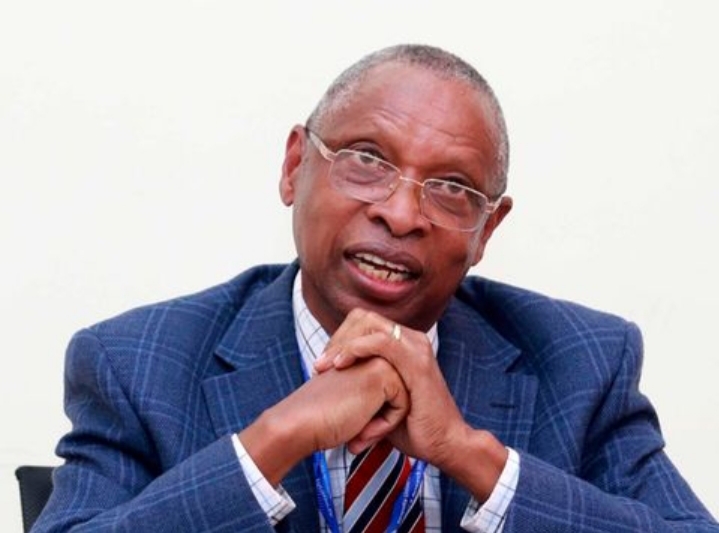
Prof George Njoroge, Chief Scientific Advisor at the Kenyatta University Teaching Referral and Research Hospital, has been honoured with the Greater Manchester Cancer Award presented by the Greater Manchester Cancer Alliance for his role in advancing oesophageal cancer research and intervention strategies in Kenya.
The award celebrates his leadership in a multinational research partnership involving the University of Manchester, The Christie NHS Foundation Trust, and Kenyan medical institutions. The collaboration was recognised for significantly improving early detection efforts and survival outcomes for oesophageal (throat) cancer patients.
The project, which also received Sh446 million funding support from the UK National Institutes of Health, focuses on deploying mobile clinics and strengthening community-based screening systems to detect cancer at earlier, more treatable stages.
Speaking after receiving the award, Prof Njoroge described the recognition as both humbling and encouraging for cancer research efforts in Africa.
He said the initiative was designed to address late diagnosis, which remains one of the biggest challenges in treating oesophageal cancer in Kenya.
“In Kenya, oesophageal cancer is the third most common cancer but also the deadliest, causing about 4,400 deaths annually,” he noted, stressing that most patients arrive at hospitals when the disease is already at an advanced stage.
Health experts have placed Kenya within Africa’s “oesophageal cancer corridor,” a region with some of the highest incidence rates globally, with a prevalence rate of 17.6 per 100,000 people.
The research team adopted a “hub-and-spoke” model that combined community outreach, training of health workers, and introduction of mobile endoscopy services across Kisii, Nyeri, Nakuru, Kiambu, and Meru counties.
Through the programme, more than 400 clinicians and 500 community health workers were trained, while over 1,000 diagnostic procedures have already been conducted, including detection of pre-cancerous conditions.
Prof Njoroge explained that many patients initially dismiss early symptoms such as sore throat, cough, or heartburn, often delaying medical attention until swallowing becomes difficult, at which point the disease is usually in an advanced stage.
“At that stage, treatment becomes far more difficult and survival chances are drastically reduced,” he said.
The project introduced a portable endoscopy system that allows doctors to examine throat cells without requiring patients to travel long distances, improving access to early diagnosis in underserved communities.
According to the research team, the findings are already influencing health policy discussions and could help shape future national strategies for early cancer detection and prevention.
A statement from the Greater Manchester Cancer Alliance described the project as a model for equitable global health collaboration, noting that it combines shared leadership, community engagement, and reciprocal training to improve cancer outcomes across both Africa and the United Kingdom.
The award came amid growing concern over the high mortality rate of oesophageal cancer in Kenya, despite ongoing efforts to improve awareness and access to screening services.