By Segun Adeyanju
South African vegetable farmer, Thulani Magida, is proving that entrepreneurial strategy, not land ownership, can be the strongest driver of success in communal agriculture.
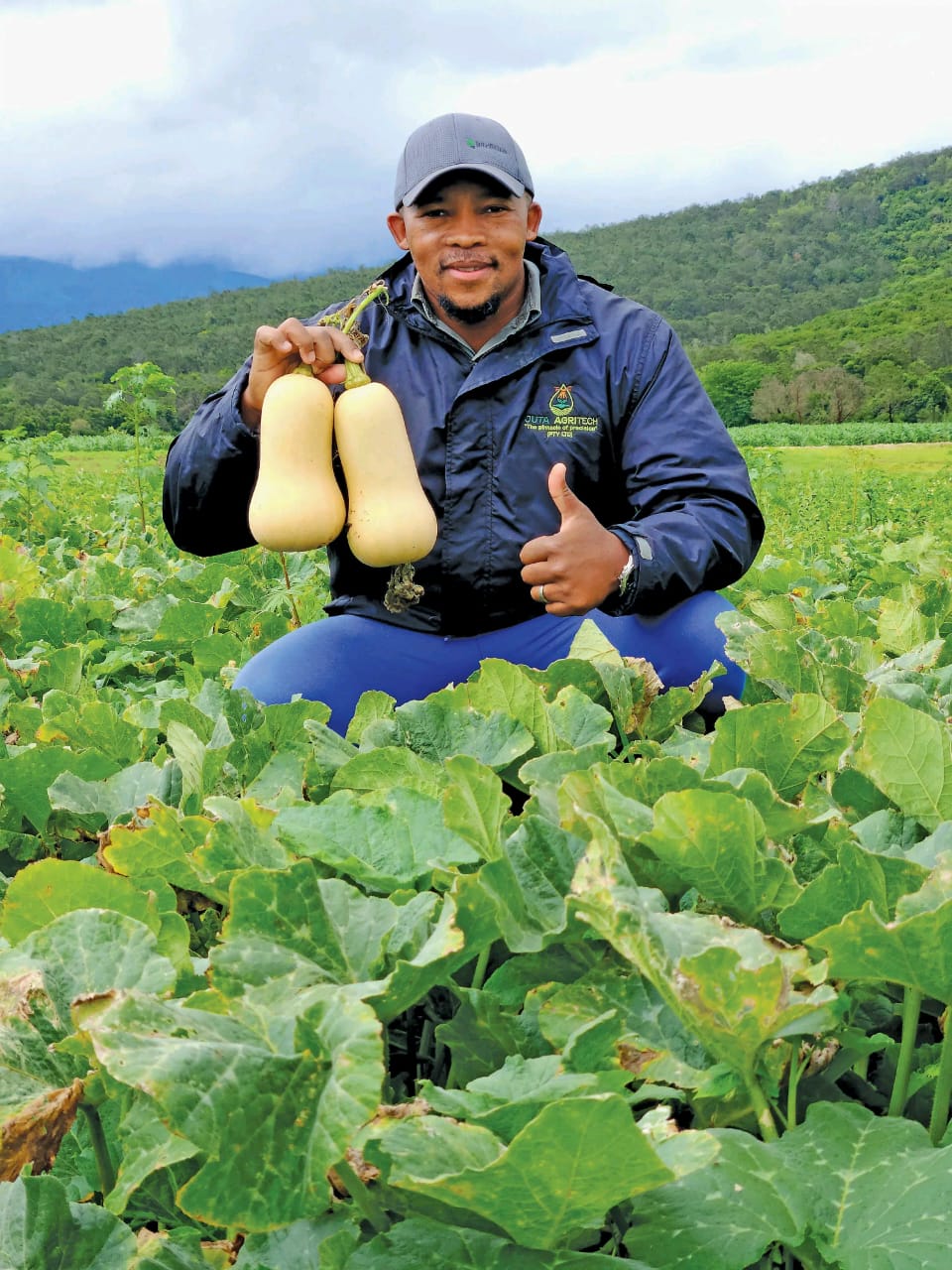
Magida, a former agricultural economist, left his 14-year corporate career in 2022 and invested his pension to establish Juta Agritech on communal land in the Keiskammahoek Irrigation Scheme in Qonce, Eastern Cape.
Starting with just 1.25ha due to limited funds, he has expanded to 38ha of potatoes, cabbages, butternut and pumpkins through cost innovation, resourcefulness and steady reinvestment.
His early years were difficult. Without a title deed to secure loans, Magida struggled to access credit, forcing him to cut back on fertiliser, machinery and pest control.
Yields suffered, potatoes averaged 22t/ha compared to the 50t/ha commercial benchmark, but through data-driven soil management and disciplined capital use, he gradually improved productivity.
Potato yields now stand at 46t/ha, cabbage packout has increased from 35% to 85%, and he is targeting 55t/ha this season. Key improvements include using better seed, applying Afrikelp growth stimulants, fixing soil pH, installing fixed irrigation and acquiring a ridger with provincial support.
Magida, who employs 11 permanent and over 100 seasonal workers, trains agriculture students and supports fellow communal farmers.
His aim, he says, is to build a broader local agro-economy, not just a single enterprise.
In 2024, he launched Rural Fresh, a value-addition and aggregation venture supplying retailers and processors.
He already services the fresh produce market and has secured a contract to grow potatoes for fast-food chain Steers, a breakthrough he hopes will attract more processors to the region.
Still, infrastructure remains a major bottleneck. The state-owned washing and packing facility in the irrigation scheme is derelict, limiting the marketability of his potatoes.
Building a private facility, he says, is beyond his current capital capacity.
Yet, Magida believes the 9,000ha scheme, only 46% under cultivation holds enormous potential. With coordinated entrepreneurship, he says, it could become a major agricultural hub.
Through technical expertise, business discipline and community collaboration, Magida is showing that communal farming can be commercially viable, and a powerful engine for rural economic growth.