What started as a simple tool for side hustlers has grown into one of Africa’s most influential platforms in the digital commerce space. Selar, the brainchild of Douglas Kendyson, is today fuelling a financial revolution for creators across the continent.
Launched in 2016, Selar was born out of a straightforward but often-overlooked problem—African creators had no easy way to sell their digital products. Whether it was an ebook, a video course, or a webinar ticket, monetisation was either blocked by technical hurdles or crippled by inaccessible global payment systems.
Selar set out to change that—and did so with remarkable clarity.
A Platform Built for African Creators
From the start, Selar aimed to eliminate the friction that held creators back. The idea was simple: build a platform that allows anyone—without coding skills or a website—to start selling within minutes.
It quickly found traction. By 2020, the team had designed a sleek, no-fuss product that let users upload, price, and sell content in multiple currencies, including naira, dollars, pounds, cedis, and rand. Local and international payment options were built in, and creators could manage everything—from affiliate campaigns to sales analytics—from one dashboard.
Over time, the platform added powerful features like automated checkouts, promo coupons, drip courses, student progress tracking, certificates, and integrated marketing tools. What really set Selar apart was that it spoke directly to the African context—low entry barriers, no monthly fees, and only transaction charges.
“You get to sell in any currency…”
One of Selar’s defining strengths is its cross-border functionality. “Selar supports eight currencies today, and because we work with multiple providers to make this possible, payouts to your bank account/wallet are made based on the currency of the sale. You get to sell in any currency and have the amount converted and credited in your country’s default currency,” the company says.
This small detail made a big difference—allowing creators to sell globally without being limited by geography or complex banking systems.
From Tinkering to Transformation: The Douglas Kendyson Story
Douglas Kendyson, a Covenant University graduate and former software developer, was no stranger to digital payments. He had previously worked at Paystack and Flutterwave, two of Nigeria’s most important fintechs. After a stint in Dubai, he returned with a vision to build a product that could serve millions.
That product became Selar.
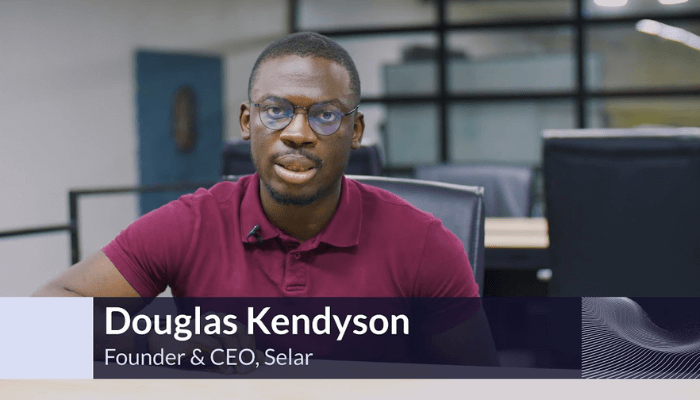
In 2024 alone, Selar disbursed N9.8 billion to more than 241,000 creators selling digital content such as ebooks, courses, music, and templates. The payout numbers not only prove the platform’s scalability but also reflect the growing power of the African creator economy.
Selar in 2025: A Digital Marketplace for the Continent
As of 2025, Selar (rebranded from selar.com to selar.co) has matured into a full-fledged ecosystem. Today, users can sell everything from video lessons and design templates to music, coaching sessions, and event passes.
Selar now offers same-day payouts, works with Stripe and PayPal, supports custom pricing, and delivers in-depth analytics that help creators scale smartly. Whether you’re selling to someone in Accra or Johannesburg, the experience is seamless.
Why Selar Works: Simplicity Meets Purpose
Selar’s success is rooted in its deep understanding of creator pain points—particularly in Africa. The platform removes barriers, not just in payments but in mindset. It makes digital entrepreneurship accessible, practical, and scalable.
Most importantly, it listens. Features like affiliate marketing and advanced course-hosting didn’t just appear—they were the result of active user feedback and continuous iteration.
And Selar’s most effective marketing strategy? The creators themselves. Every launch, every success story, every payout has helped drive word-of-mouth growth and inspired more creators to join the movement.
The Future Is Local—and Global
Selar isn’t stopping. The company continues to grow its user base in Nigeria, Ghana, Kenya, and South Africa, while eyeing broader pan-African expansion. It’s now competing with global platforms like Gumroad, Kajabi, and Teachable—not by mimicking them, but by staying true to African realities.
It’s not just a tech company; it’s a partner in progress. And in a continent bursting with creative potential, that might be the most valuable product of all.