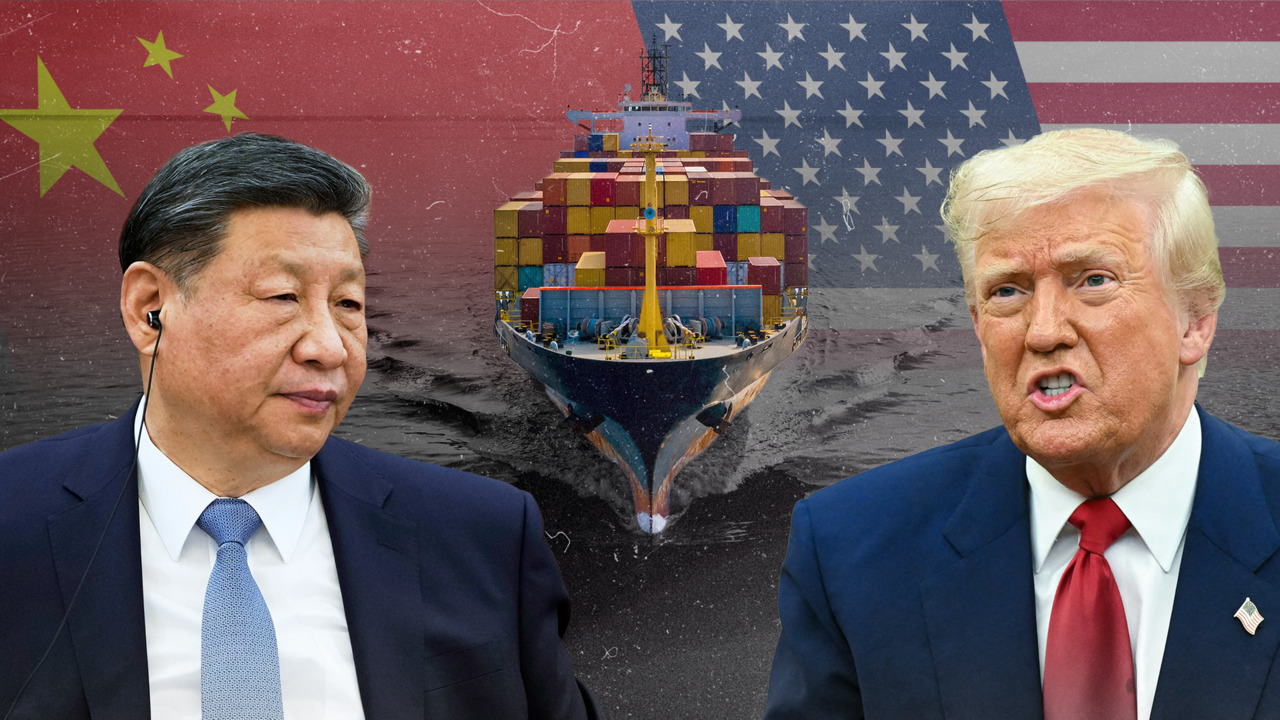
In a significant move to ease tensions from their ongoing trade dispute, the United States and China have reached an agreement to drastically reduce tariffs for a 90-day period.
The development, announced Monday, marks a major step toward de-escalation in a trade conflict that has rattled global markets and heightened fears of a potential worldwide economic slowdown.
This agreement emerged after the first formal negotiations between the two countries since US President Donald Trump initiated a series of tariff hikes.
The joint statement from Washington and Beijing confirms a mutual decision to scale back their steep tariffs—previously in triple digits—to more moderate levels in the double digits, as both sides agreed to continue discussions.
Describing the weekend negotiations, US Treasury Secretary Scott Bessent called the talks with Chinese Vice Premier He Lifeng and trade representative Li Chenggang both “productive” and “robust”.
“Both sides showed a great respect,” Bessent told journalists.
Last month, the Donald Trump administration slapped a 145 percent tariff on Chinese imports—substantially higher than the 10 percent imposed on other nations under the same policy wave. China responded with a 125 percent tariff on American goods.
Now, under the new arrangement, the US will bring its tariffs down to 30 percent, while China plans to lower its own rate to 10 percent.
Beijing welcomed the outcome, highlighting the talks as a major achievement. The discussions took place at the Geneva residence of Switzerland’s ambassador to the United Nations, a setting chosen for its discretion.
“This move… is in the interest of the two countries and the common interest of the world,” said the Chinese commerce ministry, expressing optimism that the US would cooperate further “to correct the wrong practice of unilateral tariff rises”.
READ ALSO: Trump’s Trade War Sparks Flood of ‘Luxury’ Knockoffs from China
Markets responded positively, with stock prices and the dollar rebounding after taking a hit when the tariff measures were first introduced in April.
Focus on Fentanyl Cooperation
While the US will maintain an additional 20 percent tariff targeting Chinese exports of chemicals linked to fentanyl production, the two nations are committing to work together on this issue. US Trade Representative Jamieson Greer explained that these specific duties remain for now.
“Those remain unchanged for now,” he stated. However, he added that “both the Chinese and United States agreed to work constructively together on fentanyl and there is a positive path forward there as well”.
The agreement also includes a plan to “establish a mechanism to continue discussions about economic and trade relations,” according to the joint communiqué.
“I think we leave with a very good mechanism to avoid the unfortunate escalations,” Bessent noted.
He described the prior tariff standoff as a virtual “embargo” and added, “the nature of what has happened since April 2 could have been avoided if we had had this kind of mechanism in place”.
According to the Chinese commerce ministry, future negotiations will be held regularly or on an ad hoc basis, alternating between China, the US, and possibly third-party countries.
Positive Reception With Caution
Zhiwei Zhang, president and chief economist at Pinpoint Asset Management, praised the result as a diplomatic win for China.
“China took a tough stance on the US threat of high tariffs and eventually managed to get the tariffs down significantly without making concessions,” he observed.
Wang Wen, Dean at the Chongyang Institute for Financial Studies at Renmin University, echoed that sentiment, saying the agreement “exceeded expectations” and represents “the biggest easing of tensions… since the global tariff war” began. Nevertheless, he warned that challenges remain.
“Uncertainties” still exist, Wang cautioned, noting that if substantial progress is not achieved within the 90-day window, “it is possible that the tariff war will resume”.
The trade tensions between the US and China have had a considerable impact on financial markets and investor confidence, with concerns over inflation and global economic risks becoming more pronounced.
This breakthrough comes just days after President Trump revealed a new trade agreement with the United Kingdom—his first such deal following the wave of global tariffs he enacted.
World Trade Organization Director-General Ngozi Okonjo-Iweala lauded the development on Sunday, calling it a “significant step forward” and a promising sign for future global trade stability.
“Amid current global tensions, this progress is important not only for the US and China but also for the rest of the world, including the most vulnerable economies,” she noted.