The nation’s Gross Domestic Product growth fell to 2.74 per cent in 2023 from 3.10 per cent in 2022, according to new GDP report released by the National Bureau of Statistics on Thursday.
This represents the slowest growth since 2020 when the economy contracted and entered into a recession by –1.92 per cent due to the COVID-19 pandemic.
The NBS in its ‘Nigerian Gross Domestic Product Report, (Q4 2023)’ released on Thursday, stated that growth in the agriculture and manufacturing sectors of the economy reduced in 2023, while the performance of the service sectors also reduced drastically in the year.
It said the growth in the manufacturing sector reduced by 1.40 per cent in 2023, lower than 2.45 per cent in 2022 on an annual basis while the agriculture sector grew by 1.13 per cent in 2023, down from 1.88 per cent in 2022.
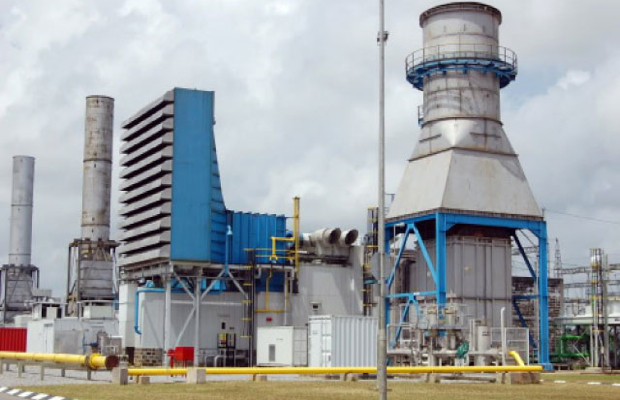
Also, on an annual basis, the non-oil sector growth in 2023 stood at 3.04 per cent relative to 4.84 per cent recorded in 2022 while the oil sector growth stood at -2.22 per cent in 2023 compared to -19.22 per cent in 2022 on an annual basis despite recording an average daily oil production of 1.55 million barrels per day.
“On an annual basis, the oil sector growth stood at -2.22 per cent in 2023 compared to -19.22 per cent in 2022. The non-oil sector growth in 2023 also stood at 3.04 per cent relative to 4.84 per cent recorded in 2022.”
The country’s full-year GDP growth is below global projections of the World Bank, International Monetary Fund and the African Development Bank.
The World Bank said that the Nigerian economy would grow by 2.9 per cent in 2023, down from 3.3 per cent in 2022, in its Africa Pulse Report April 2023 edition titled ‘Leveraging resource wealth during the low carbon transition.’
In its World Economic Outlook for April 2023 titled ‘A Rocky Recovery’, the International Monetary Fund retained its growth forecast of 3.2 per cent for Nigeria’s economy in 2023.
The African Development Bank in January projected that Nigeria’s GDP, which indicates the economic growth rate, would inch up to 3.1 per cent in 2023, adding that uncertainty about policy continuity after the election and rising insecurity depleted the nation’s growth prospect during the year.
In the fourth quarter of 2023, the statistical body said GDP grew by 3.46 per cent (year-on-year) in real terms in the fourth quarter of 2023 adding that with both the industry and services sectors increasing their contributions to the overall GDP in the fourth quarter of 2023, compared to their performance in the fourth quarter of 2022.
It stated, “This growth rate is lower than the 3.52 per cent recorded in the fourth quarter of 2022 and higher than the third quarter of 2023 growth of 2.54 per cent. The performance of the GDP in the fourth quarter of 2023 was driven mainly by the services sector, which recorded a growth of 3.98 per cent and contributed 56.55 per cent to the aggregate GDP.”
Commenting on the growth in the fourth quarter despite the economic hardship witnessed, the Director, Centre for Promotion of Private Enterprise, Dr Muda Yusuf, said, ‘The GDP report is a year-on-year comparison. If you are looking at the fourth quarters for 2022 and 2023, the nation was already preparing for the general elections, so the environment at that time was that there was so much uncertainty in the economy and a lot of people were slowing down because we were already in the campaign period which came with all sort of issues. Those things actually dampened economic activities and because you are comparing that with the fourth quarter of 2023.”
Also speaking in an earlier interview with The PUNCH on the key factors that may have led to the decline in Gross Domestic product growth, a professor of Economics and Director of PhD Programme at the Pan-Atlantic University, Prof Perekunah Eregha, said the slow growth was expected, blaming factors, such as high production cost, among others. He warned that there is likely danger ahead if the country failed to boost oil production.
SOURCE: PUNCHNG