Russian courts have recently been at the center of controversy, as they have handed down a slew of short prison sentences to numerous individuals who were detained at events commemorating the life and legacy of Alexei Navalny, a prominent critic of the Kremlin. The official court announcements shed light on the severity of these sentences, with a staggering 154 individuals receiving jail time of up to 14 days in Saint Petersburg alone. This punitive action stems from alleged violations of Russia’s strict anti-protest laws, underscoring the government’s unwavering stance against dissent and public expressions of opposition.
The details revealed in these court rulings, made public by the city’s court service over the weekend, paint a grim picture of the state of civil liberties and freedom of expression in Russia. Alongside the sentences in Saint Petersburg, reports from rights groups and independent media outlets have highlighted similar crackdowns occurring in other cities across the country. Such actions not only stifle the voices of dissent but also cast a shadow over the purported democratic principles upheld by the Russian government.
The backdrop against which these events unfold is the tragic passing of Alexei Navalny, who died at the age of 47 in an Arctic prison colony. Navalny’s incarceration and subsequent demise have sparked outrage both domestically and internationally, with many viewing his detention and treatment as politically motivated retaliation for his vocal opposition to President Vladimir Putin’s regime. The circumstances surrounding Navalny’s death have only served to deepen the divide between the government and its critics, fueling speculation and mistrust.
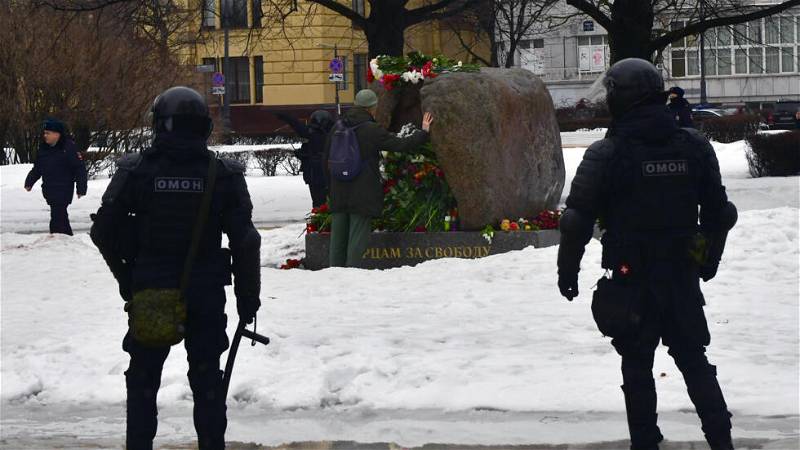
In the aftermath of Navalny’s passing, hundreds of Russians took to the streets in cities across the country to pay their respects and mourn his loss. However, their peaceful gatherings were met with heavy-handed tactics from law enforcement, resulting in a wave of arrests and detentions. This crackdown on mourners underscores the extent to which dissent and public assembly are suppressed in Russia, where anti-Kremlin demonstrations are effectively deemed illegal under stringent military censorship rules and laws against unauthorized rallies.
Moreover, reports emerged of police and plainclothes officers patrolling memorial sites, dismantling makeshift tributes, and dispersing crowds overnight. Such actions not only demonstrate the government’s intolerance of dissent but also serve as a stark reminder of the ongoing suppression of civil liberties in the country. The removal of these memorials symbolizes not just the erasure of Navalny’s memory but also the silencing of voices demanding accountability and justice.
Amidst the outcry and grief following Navalny’s death, Russian authorities have faced mounting criticism for their handling of the situation. Despite calls for transparency and accountability, Navalny’s family and legal representatives have been denied access to his body, further fueling suspicion and mistrust. President Putin’s conspicuous silence on the matter has only intensified speculation surrounding Navalny’s death, raising questions about the government’s complicity and accountability.
As the international community watches with bated breath, the Kremlin’s response to Navalny’s passing remains a subject of scrutiny and conjecture. While Western leaders have condemned the Russian government’s actions and held Putin responsible, the Kremlin has remained steadfast in its refusal to acknowledge any wrongdoing. This steadfast denial only serves to deepen the sense of injustice felt by Navalny’s supporters and underscores the challenges faced by those who dare to speak out against the status quo in Russia.
Conclusion
Navalny
The sentencing of individuals commemorating Navalny’s legacy, coupled with the government’s handling of his passing, highlights the broader issues surrounding freedom of expression and dissent in Russia. The crackdown on protests and the suppression of opposition voices paint a troubling picture of a country grappling with political repression and authoritarian tendencies. As Navalny’s supporters continue to demand accountability and justice, the world watches on, hoping for a resolution that honors his memory and upholds the principles of democracy and human rights.