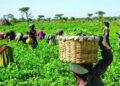
Wheat production, the Federal Ministry of Agriculture and Food Security has taken a significant stride by initiating the 2023/24 dry season farming program, demonstrating a dedicated effort to enhance production and fortify national food security. This ambitious endeavor involves an irrigation project targeting an expansive 200,000 to 250,000 hectares of arable land, with a lofty projection of yielding 1.25 million tons of wheat. The official launch of this irrigation scheme unfolded in Gashua, Yobe state, during the weekend, where the Minister of Agriculture and Food Security, Abubakar Kyari, shed light on the broader context of this agricultural venture.
Minister Kyari underscored the urgent nature of this farming initiative by framing it as a response to President Bola Tinubu’s declaration of an emergency regarding national food security. He revealed that the national irrigation farming is being implemented under the umbrella of the Agricultural Growth Scheme and Agro Pocket (NAGS-AP) project, emphasizing a strategic approach to address the nation’s food security concerns, wheat production.
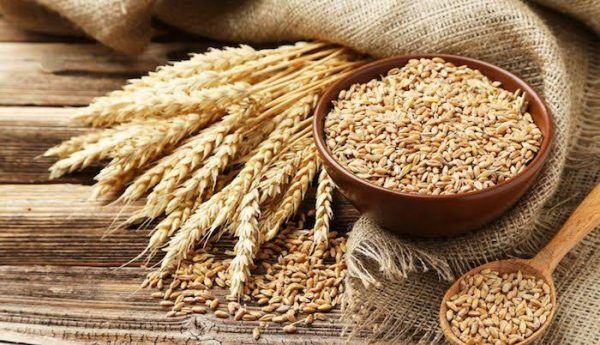
Wheat production
In the specific region of Yobe, the dry-season farming is set to kick off in the Kumadugu/Yobe and Wachakal River Basins, encompassing the Nguru wetlands. Minister Kyari detailed the provision of essential farm inputs, including assorted fertilizers, improved seeds, and pesticides, all subsidized by the federal government at a rate of 50 percent. This subsidy is a significant measure aimed at easing the financial burden on farmers and encouraging widespread participation in the dry-season farming initiative, wheat production.
“The farm inputs have been delivered for distribution to farmers in the state,” stated Minister Kyari, elucidating the tangible steps taken to ensure that farmers have access to the necessary resources. He further specified the allocation for each farmer, detailing that they would receive seven bags of NPK and liquid fertilizers, two bags of improved wheat seeds, and a corresponding quantity of pesticides, contingent on the size of the arable land earmarked for wheat cultivation, wheat production.
To ensure effective implementation and oversight, Minister Kyari highlighted the establishment of a monitoring team in each of the wheat-producing states. This team is tasked with evaluating the entire spectrum of activities, ranging from land preparation to the eventual harvest of crops produced in the various river basins across the states involved.
However, amidst the optimism surrounding this initiative, there are voices expressing concerns. Isa Mai Unguwa, representing farmers, lamented his situation despite contributing to the annual production of 3,000 bags of rice. He pointed out that he has never benefited from the federal and state government’s subsidized farm inputs, shedding light on the challenges faced by certain segments of the farming community in accessing essential resources.
Conclusion: wheat peoduction
The commencement of the 2023/24 dry season farming program by the Federal Ministry of Agriculture and Food Security marks a pivotal moment in the country’s quest for enhanced food production and security. The comprehensive approach, including irrigation projects, subsidized inputs, and monitoring mechanisms, demonstrates a concerted effort to address the multifaceted challenges faced by the agricultural sector, albeit with acknowledgment of existing disparities in access among farmers, wheat production.
Source: gaurdian.ng