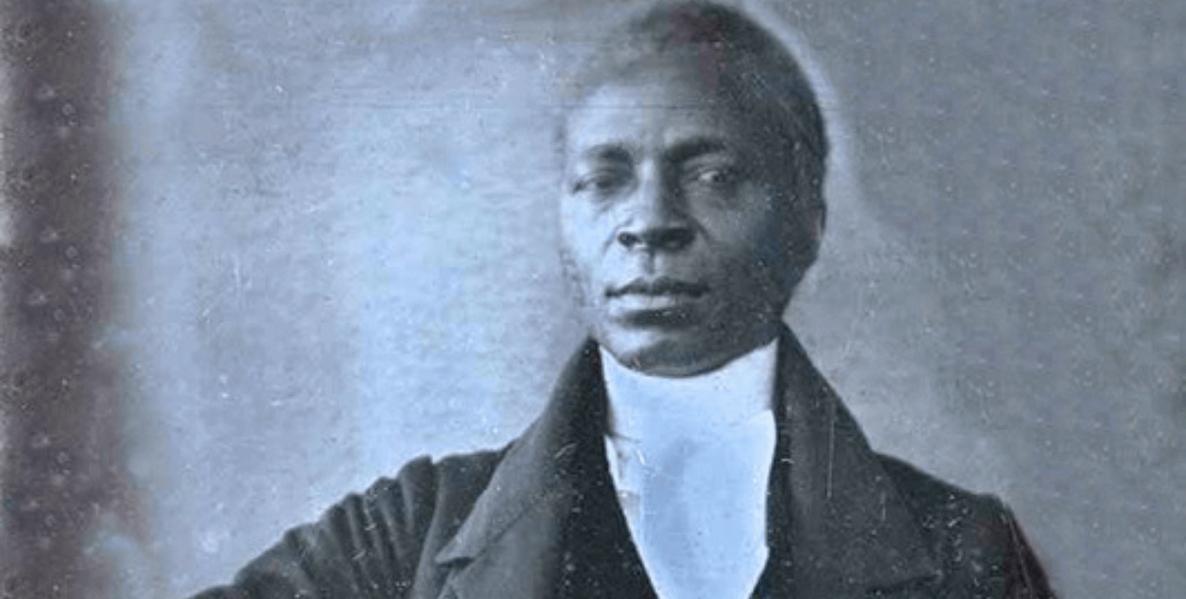
Early Life and Background
James Forten was born free on September 2, 1766, in Philadelphia, Pennsylvania, then part of Britain’s North American colonies. He was the second child and only son of Thomas Fortune, a skilled sailmaker, and Margaret Waymouth. Forten later chose to modify the spelling of his surname from “Fortune” to “Forten,” seeking to distinguish himself from the many enslaved African Americans who bore that name.
Forten’s childhood was marked by both opportunity and hardship. His father’s early death by drowning in 1774 left the family without its primary breadwinner, compelling young Forten to rely on the support of Philadelphia’s vibrant free Black community and its white Quaker allies. He attended the Friends’ African School, where he received a rare formal education for a Black child of the time. He also learned sailmaking under the guidance of his father’s former colleagues, laying the foundation for what would become a remarkable business career.
Service in the American Revolution
At just 15, Forten volunteered for service aboard the privateer *Royal Louis* during the American Revolutionary War, under Captain Stephen Decatur. His service was cut short when the *Royal Louis* was captured by the British frigate *Amphion*. Forten was subsequently imprisoned on the notorious prison ship *Jersey*, enduring harsh conditions until the war’s conclusion. Following his release, he sailed to England as a merchant seaman aboard the *Commerce*, spending time in London before returning to Philadelphia in 1785.
Building a Business and a Legacy
Back in Philadelphia, Forten began an apprenticeship under Robert Bridges, his former employer’s trusted sailmaker. Demonstrating exceptional skill and leadership, Forten rose through the ranks and, in 1798, acquired the business when Bridges retired. Renaming it Forten & Company, he built it into one of the most successful sail lofts in Philadelphia. His sails earned widespread respect for their quality, and his firm became a rare example of an integrated workplace, employing both Black and white workers on equal terms. By doing so, Forten provided stable livelihoods for hundreds and set an example of interracial cooperation in an era of deep prejudice.
Abolitionism and Civic Engagement
Beyond his commercial success, Forten was deeply committed to the fight for civil rights and the abolition of slavery. He supported and led multiple organizations, including the Free African Society, the Pennsylvania Abolition Society, and the American Moral Reform Society. He maintained close partnerships with other prominent Black leaders such as Absalom Jones and Richard Allen, as well as influential white allies like physician Benjamin Rush and Bishop William White. He was active in the affairs of St. Thomas’s African Episcopal Church, where he served on the vestry.
Forten’s advocacy extended to the printed word. In 1813, he published *Letters from a Man of Colour*, an anonymous pamphlet condemning a discriminatory bill before the Pennsylvania Senate. His writings and activism positioned him as a key figure in the rise of African American public discourse in the early Republic.
A close ally of William Lloyd Garrison, Forten provided significant financial support to *The Liberator*, Garrison’s pioneering anti-slavery newspaper. Though Forten initially explored the aims of the American Colonization Society in 1816, he soon rejected its premise, arguing forcefully that free Black Americans should claim their rights and place in the United States rather than be encouraged to emigrate to Africa.
Family Life and Final Years
James Forten’s personal life was marked by family devotion and quiet perseverance. His first marriage, to Martha Beatte, was cut tragically short by her death after only six months. In December 1805, he married Charlotte Vandine, a woman of African, Dutch, and Native American ancestry whose family was also involved in sailmaking. Together they raised nine children, many of whom continued their father’s legacy of civic leadership.
Forten remained active in public life despite rising racial tensions and increasing challenges, especially in the aftermath of Nat Turner’s 1831 rebellion. Throughout his career, he navigated the difficult balance of advocating forcefully for his community’s rights while maintaining respect among both Black Philadelphians and the city’s white establishment.
James Forten died peacefully at home in Philadelphia on March 4, 1842, after a lengthy illness. His funeral drew thousands of mourners of all races — one of the largest gatherings the city had seen since Benjamin Franklin’s passing — a testament to the breadth of his influence and the respect he commanded.
Legacy
James Forten’s life illustrates the complexities of race and civil rights in the antebellum North. In a society where free African Americans faced constant economic, social, and political obstacles, he demonstrated that prosperity, dignity, and tireless activism could coexist. Forten’s story remains a powerful example of how leadership, enterprise, and moral conviction can challenge prejudice and help shape a nation’s conscience.
Further Reading
* Julie Winch, *A Gentleman of Color: The Life of James Forten* (Oxford University Press, 2002) — a definitive biography.
* Glen Arthur McClish, “A Man of Feeling, a Man of Colour: James Forten and the Rise of African American Deliberative Rhetoric,” *Rhetorica*, Vol. 25, No. 3 (2007).
* Julie Winch, *Philadelphia’s Black Elite: Activism, Accommodation, and the Struggle for Autonomy, 1787–1848* (Temple University Press, 1988).