By Segun Adeyanju
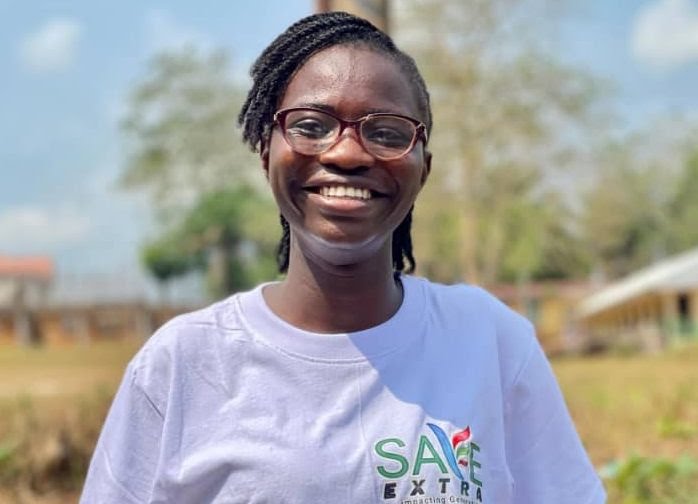
A young Nigerian biochemist, Joy Mamkwe, has sparked attention with an innovative solution to menstrual hygiene challenges by converting banana trunks into reusable sanitary pads.
Mamkwe, a graduate of Michael Okpara University of Agriculture, Umudike, developed the eco-friendly product from banana trunk fibre, a widely available agricultural residue in southern Nigeria.
She said the pads are fully produced with local materials, safe, and affordable for women and girls who can no longer keep up with the rising cost of disposable options.
“Sanitary pads are now luxury items for many rural girls and poor women. I wanted to change that with a clean, low-cost, and sustainable alternative,” Mamkwe explained.
Her journey began in her final year of university in 2022 and continued through her National Youth Service. Although she has started small-scale production, she said expansion has stalled due to financial constraints.
She is seeking N1.5 million to rent a workspace and acquire basic machinery, which would also support the process of regulatory registration with NAFDAC.
Despite receiving bulk orders from some organizations for school and community outreach, Mamkwe recently rejected a funding offer from a potential investor who insisted on being named co-founder.
She made the decision on the advice of a mentor who urged her to protect her intellectual property.
Her creativity has not gone unnoticed. Abia State’s Commissioner for Small and Medium Enterprises, Mike Akpara, has encouraged her to formally present her invention to the ministry for evaluation and possible support from the state government.
“She is solving a real problem. We are ready to look into her innovation and see how we can help her scale it,” Akpara said.
Also applauding Mamkwe’s effort, Professor Mabel Onwuka of the university’s Centre for Gender Youth and Child Development said the school had already supported the product during this year’s International Women’s Day by distributing it to beneficiaries.
Mamkwe, who is now considering a postgraduate degree in Public Health, says her goal is not only to expand production but also to empower others through training and advocacy, bringing dignity to menstruating girls and women across underserved communities.