Nigeria gets about 40,000 megawatts of electricity from generators powered by Premium Motor Spirit, popularly called petrol, and those run by Automotive Gas Oil, also known as diesel, the Federal Government declared on Tuesday.
It disclosed this at the ministerial summit on Integrated National Electricity Policy and Strategic Implementation Plan while examining the key challenges to Nigeria’s electricity reliability through the prism of governance, adherence to rules/contracts and finance.
Nigeria’s power generation and supply from its national grid revolves between 3,500MW and 4,500MW for an estimated population of 200 million people.
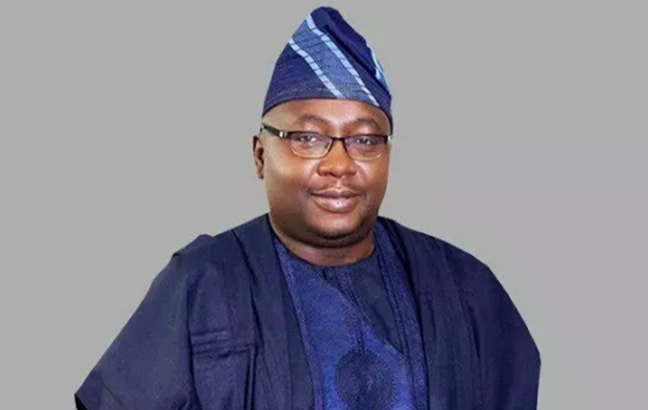
In his address at the summit, the Minister of Power, Adebayo Adelabu, pointed out that one of the main objectives of the Nigerian electricity sector reform programme initiated over 23 years ago was to make electricity available to consumers across the country with efficiency and consistency.
This, however, had yet to be achieved, rather, according to the minister, Nigeria had continued to burn hundreds of billions of naira to generate electricity through diesel- and petrol-powered generators.
He stated that electricity consumption per capita in Nigeria was at 140kilowatt-hour in 2021, relatively low in comparison to neighbouring countries and almost three times lower than the average for Sub-Saharan Africa.
Adelabu said, “Nigeria is a case study in a deep electricity paradox. Nigeria has grown to become the host of probably the world’s largest fleet of diesel- and petrol-powered generation capacity that is utilised for baseload supply.
“Various figures have been mentioned but it is safe to say that this fleet measures no less that 40,000MW of total capacity.
“At an average operating cost of no less than N250/kWh as opposed to an average economic tariff today of approximately N120/kWh (weighted between petrol and diesel generation), the daily cost of this extreme inefficiency in electricity supply in Nigeria, is measurable in tens of billions of naira daily.”
He added that this “is hard-earned money that would better be deployed to savings, discretionary consumer spending and tax revenue for governments instead of being literally burnt and going up in diesel and petrol emissions that harm our environment and contribute to incessant noise pollution in many of Nigeria’s cities.
“It’s an honour to leverage my role in bringing together our industry for collaborative action, aiming to rectify this disconcerting situation. Our immediate goal is to significantly transform the current ratio between backup electricity generation and on-grid supply in the near to mid-term.”
Adelabu also pointed out that it was time to restructure the Transmission Company of Nigeria into two entities: the Independent System Operator, and the Transmission Service Provider.
“This restructuring must synchronise with the evolving landscape of State Electricity Markets, addressing calls for the decentralisation of the national grid into regional grids interconnected by a new higher voltage national or super-grid.
“Essentially, we must ask whether the government should directly provide electricity nationwide or rather facilitate its provision. Drawing comparisons with China’s centralised model and the US’s diverse access models—like rural cooperatives and state-based utilities with regulatory oversight—presents various considerations.”
Adelabu also told stakeholders at the summit that encouraging “our Pension Fund Administrators, who collectively wield over N17tn, to delve into understanding NESI (Nigeria Electricity Supply Industry) and fostering bankable strategies for capital infusion is pivotal.”
He also noted that states, Local Government Areas and the current Discos must work together to invest in reinforcing and extending local distribution infrastructure in a way that enhances competition wherever possible, while also recognising the equitable vested interest that states have historically had in the shareholding of the Discos.
“State governments, in turn, must recognise that state-level policymaking and regulation is of value only if they attract investment into their domestic electricity markets,” the power minister stated.
SOURCE: PUNCHNG