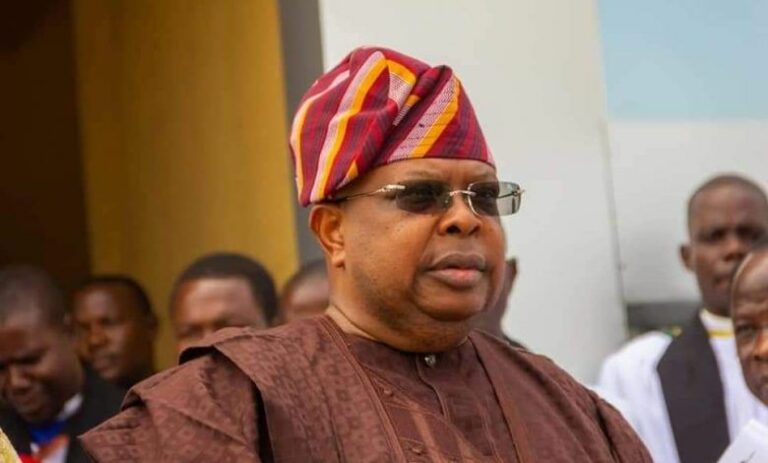
In a strategic move to accelerate Nigeria’s industrial transformation, the Director-General of the Nigeria-China Strategic Partnership, Mr. Joseph Tegbe, met with the Minister of State for Industry, Trade, and Investment, Senator John Enoh, in Abuja to outline bold priorities for advancing the country’s mining and automotive sectors.
The high-level meeting, held under the banner of President Bola Ahmed Tinubu’s Renewed Hope Agenda, centred on concrete strategies to reposition Nigeria’s economy from one heavily reliant on imports to a robust, production-driven, export-oriented industrial force.
Senator Enoh reiterated the government’s unwavering commitment to three cornerstone sectors: sugar, cotton-textile-garment (CTG), and automobiles. Each is supported by an active industry council, designed to localise production, spark domestic demand, and sharpen Nigeria’s global industrial edge.
The Nigeria First Policy: A Game-Changer in Industrial Procurement
At the heart of this transition is the Nigeria First Policy, a groundbreaking presidential directive mandating all Ministries, Departments, and Agencies (MDAs) to prioritise locally produced goods and services in public procurement. This policy has begun reshaping procurement practices nationwide, fostering job creation, enhancing local capacity, and gradually reducing Nigeria’s dependency on foreign imports.
Mr. Tegbe underscored the vital role of the Nigeria-China Strategic Partnership in this economic shift. He emphasised Nigeria’s readiness to transition from a consumption-based economy to a value-driven development partner, particularly with China. Drawing parallels with Brazil’s $94.41 billion export volume to China in 2024, he noted that Nigeria could reach similar milestones by strategically investing in high-impact sectors like agriculture, solid minerals, and industrial manufacturing.
READ ALSO: Nigeria Grants China Green Light to Build Electric Vehicle Factories
Unlocking the Mining Sector’s Industrial Potential
Nigeria’s mining sector holds immense, largely untapped promise. With over 40 commercially viable mineral resources, Mr. Tegbe stressed the need to move beyond raw material exports and invest in local beneficiation, processing, and refining. He called for robust regulatory reforms and targeted incentives to unlock the full value chain of the sector.
Supporting this effort is the Industrial Revolution Working Groups, a key initiative under the Presidential Council on Industrial Revitalisation. These groups are actively dismantling regulatory hurdles, enhancing infrastructure access, and expanding financing options to drive sustainable, long-term growth in mining and minerals processing.
Driving Nigeria’s Automotive Industry into the Future
Parallel to the mining agenda is a focused push to make Nigeria a dominant hub for vehicle assembly and full-fledged automotive manufacturing in West Africa. Through policy support and investor engagement, the government is laying the groundwork for an integrated local value chain—from component production to final vehicle assembly.
The Nigeria First Policy has already spurred demand for domestically assembled vehicles, signalling growing investor confidence in the sector. A comprehensive national automotive policy is also in the works, aimed at moving beyond basic assembly operations to advanced manufacturing, including the production of electric and energy-efficient vehicles.
Looking Ahead: From Policy to Progress
With structured policy frameworks, international partnerships, and sector-specific reforms gaining traction, Nigeria is setting the stage for an industrial breakthrough. The combined focus on mining and automotive industries signals a shift in national development thinking—from dependency to self-reliance, from raw exports to local value addition, and from policy rhetoric to tangible progress.
As Senator Enoh and Mr. Tegbe made clear, this is more than economic ambition—it’s a blueprint for Nigeria’s long-term industrial empowerment.