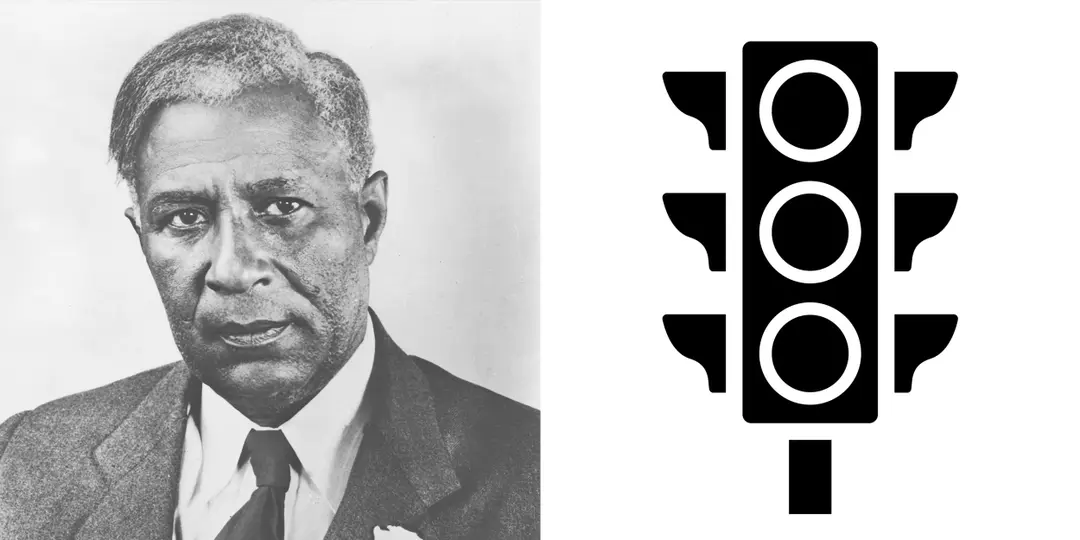
Navigating American roads was unpredictable and often dangerous in the early 20th century. Pedestrians, horse-drawn carriages, streetcars, bicycles, and automobiles all vied for space on increasingly busy streets.
While rudimentary traffic lights began appearing in the 1910s, they featured only two signals: stop (red) and go (green). The abrupt transitions led to frequent accidents, as drivers had no warning before the light changed.
A game-changing improvement arrived in 1923 when Garrett Morgan, an African American inventor from Ohio, patented a three-light traffic signal.
His innovation introduced an intermediary step—what we now recognize as the yellow light—allowing drivers to prepare for a stop and significantly reducing collisions.
A Visionary Mind Behind the Invention
Despite having only a basic education, Garrett Morgan, the son of an enslaved parent, proved to be an extraordinary inventor. His contributions extended beyond traffic control—he developed an improved sewing machine and an early version of the gas mask.
However, his work on traffic signals became one of his most widely recognized achievements, shaping modern road safety.
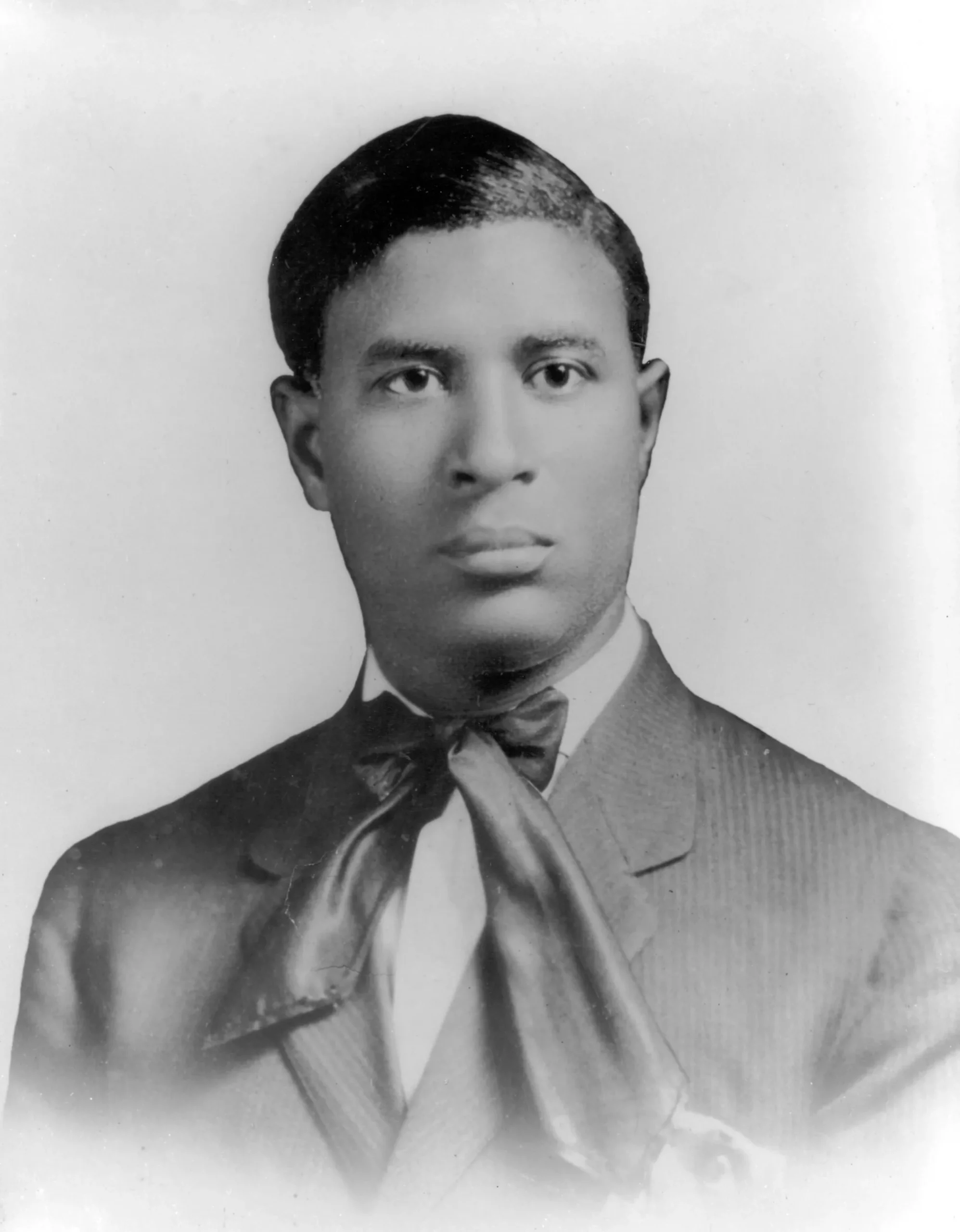
Morgan’s inspiration for his invention came from personal experience. Having become the first Black man in Cleveland to own a car, he frequently observed dangerous traffic conditions. One day, after witnessing a severe accident at an intersection, he set out to design a solution.
He envisioned a three-light system that would introduce a warning phase between stop and go, providing motorists with crucial reaction time.
By 1923, Morgan had secured patents for his traffic signal in the United States, Canada, and the United Kingdom. Eventually, he sold the rights to General Electric for $40,000—equivalent to approximately $733,000 in 2025.
How Morgan’s Traffic Signal Worked
Prior to Morgan’s invention, most traffic signals operated with only two commands: stop and go. These abrupt transitions often led to chaos at intersections.
Morgan’s design introduced a third setting, an all-directional stop, which ensured that all vehicles halted momentarily, allowing pedestrians to cross safely before traffic resumed.
The structure of his traffic signal was a T-shaped pole featuring three settings: stop, go, and an intermediate pause. It worked by allowing one direction of traffic to proceed while the others waited. The third phase, the all-stop position, briefly suspended movement in all directions to clear the intersection.
As a further enhancement, Morgan designed the system to function in a half-mast position during off-peak hours, similar to today’s blinking yellow light. This ensured continued traffic regulation while preventing unnecessary stops during low-traffic periods.
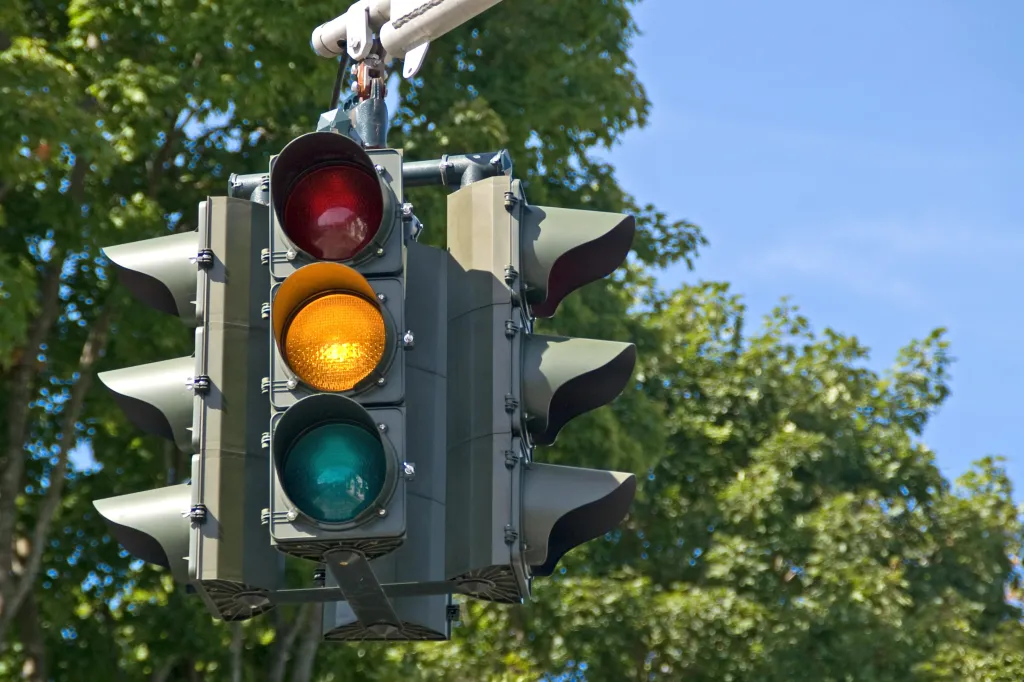
“His patent for a mechanical traffic signal contained an intermediate step between ‘stop’ and ‘go’ that cleared the intersection,” Rebekah Oakes, a U.S. Patent and Trademark historian, told CNN. “Today, we know it as the caution light or yellow light.”
Although other inventors had conceived similar traffic control ideas, Morgan was the first to receive a patent for a three-position system on November 20, 1923. His design laid the groundwork for the modern traffic lights that are now standard worldwide.
A Legacy Beyond Traffic Safety
Garrett Morgan’s ingenuity extended far beyond traffic control. Following the tragic Triangle Shirtwaist Factory fire in 1911, where 146 garment workers perished due to insufficient safety measures, Morgan recognized the urgent need for better protective equipment. He developed a gas mask that allowed wearers to breathe cleaner air in smoke-filled environments.
His invention leveraged the understanding that carbon monoxide remains at eye level while fresher air lingers closer to the ground. His mask featured a long intake tube that extended downward, enabling users to inhale unpolluted air.
Despite the groundbreaking potential of his gas mask, racial prejudice hindered its initial acceptance. To bypass discrimination, Morgan orchestrated an ingenious demonstration.
“He created a theatrical scheme to bypass potential buyers’ bigotry. In 1914, he hired a white actor to pose as the inventor. Morgan then disguised himself, filled a tent with noxious smoke, and cued the actor to entertain the crowd as Morgan strapped on his breathing device and entered the tent—where he waited for nearly half an hour before emerging safely to an aghast audience,” Scientific American explained.
The dramatic demonstration gained media attention, and sales of his gas mask soared. The device went on to receive a gold medal from the International Association of Fire Chiefs in 1914. In 1916, Morgan himself used his invention to rescue several workers trapped in a collapsed tunnel beneath Lake Erie after a gas explosion. The gas mask later became an essential tool for soldiers during World War I.
Honoring a Trailblazer
Morgan passed away in 1963, just before the centennial celebration of the Emancipation Proclamation. While he did not receive the full recognition he deserved during his lifetime, he was posthumously honoured for his contributions.
He was nominated for a Carnegie Medal and a Medal for Bravery for his heroic rescue efforts at Lake Erie. Additionally, before his passing, the U.S. government awarded him a citation for his traffic signal invention.
Today, the National Inventors Hall of Fame and the Department of Transportation recognize Morgan’s innovations, acknowledging his lasting impact on road safety and public health. His legacy lives on in every intersection where traffic flows seamlessly—guided by the very invention he pioneered.