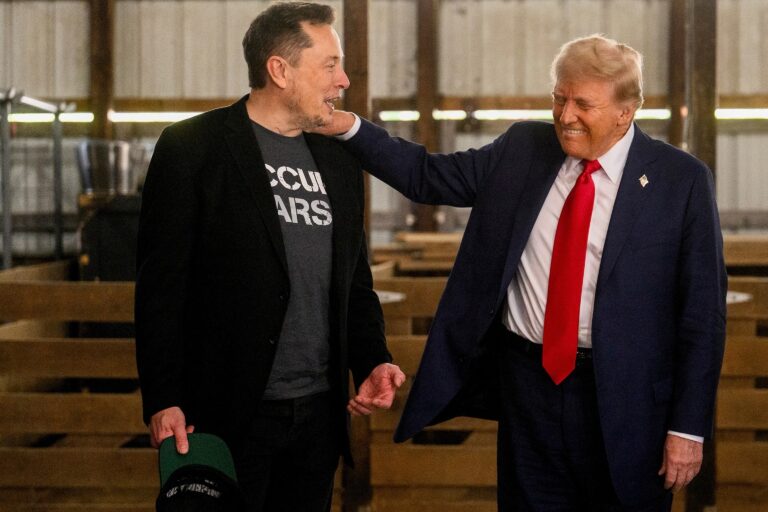
Elon Musk, the billionaire CEO of Tesla and SpaceX, has officially exited the Donald Trump administration, ending a brief but headline-grabbing tenure as a special government employee at the Department of Government Efficiency.
A White House official confirmed Musk’s departure to Reuters late Wednesday, stating that his “off-boarding will begin tonight.” The announcement followed a social media post by Musk on X (formerly Twitter), in which he thanked President Donald Trump and reflected on what he called a “bold attempt to reinvent government.”
“As my scheduled time as a Special Government Employee comes to an end, I would like to thank President @realDonaldTrump for the opportunity to reduce wasteful spending.
“The @DOGE mission will only strengthen over time as it becomes a way of life throughout the government,” Musk wrote.
No Formal Farewell
According to a source familiar with the matter, Musk did not have a formal conversation with the president before making his departure public. The decision to end his role was made at a senior staff level within the White House.
While the exact reasons behind his exit remain unclear, insiders say the timing was no coincidence. Musk’s resignation came just one day after he publicly criticised Trump’s flagship tax bill, calling it “too expensive” and “damaging” to the progress he had hoped to make within the newly created Department of Government Efficiency (DOGE Service).
Internal Fallout and Rising Tensions
Musk’s comments did not sit well with senior administration officials. Deputy Chief of Staff Stephen Miller was reportedly “particularly irked,” according to a source, prompting urgent calls to Republican senators to reaffirm Trump’s commitment to the tax package.
Despite his loyalty to Trump, Musk’s influence in the administration had been on a slow but steady decline in recent months. Once hailed as a maverick reformer with an eye for cutting bureaucratic red tape, Musk’s confrontational style and erratic media presence drew criticism from both inside and outside the administration.
His signature moment came during a fiery appearance at the Conservative Political Action Conference (CPAC) in February, where he waved a red metallic chainsaw before a cheering crowd, declaring: “This is the chainsaw for bureaucracy!”
A Polarising Chapter Ends
Musk’s appointment had been unconventional from the start — a tech mogul and private-sector titan tasked with shaking up entrenched federal systems. But his mission to bring “generational savings” through streamlined government spending never fully materialised.
Though Musk remains close to President Trump on a personal level, his exit marks a clear turning point in their working relationship — one defined by ambition, spectacle, and ultimately, unmet expectations.
Context: Wider Political Developments
His departure comes amid broader shifts within the Trump administration. Just days ago, a U.S. court blocked several key Trump-era tariffs, ruling that the president had overstepped his authority. The decision adds to the mounting pressure facing the administration as it navigates economic challenges and an increasingly polarised political landscape.
Editor’s Note: Elon Musk is expected to resume full-time leadership at Tesla and SpaceX, where he continues to oversee projects ranging from electric vehicles to interplanetary travel.