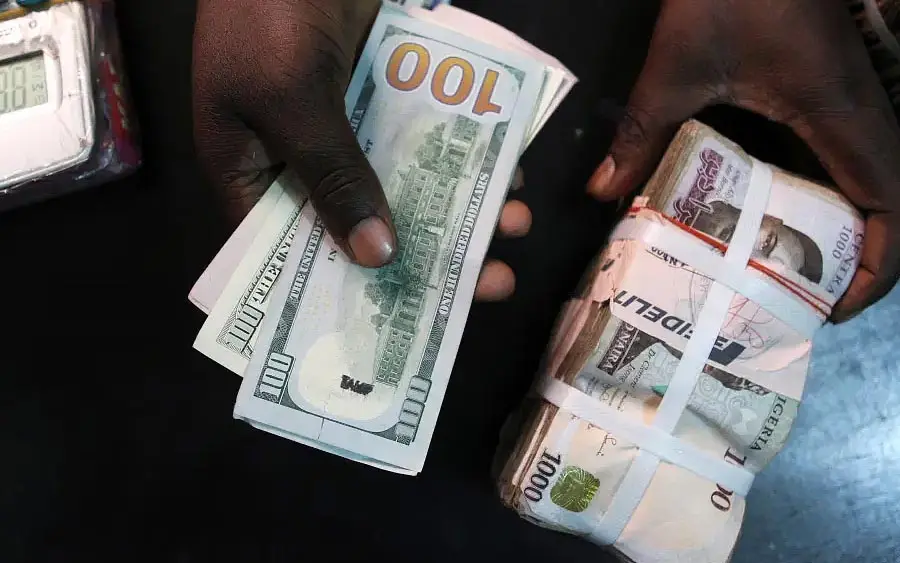
Nigeria’s external debt stock (debt owed to foreign entities) has increased by N28tn due to the devaluation of the Nigerian naira against the United States dollar, findings by The PUNCH reveal.
According to the latest debt profile data published by the Debt Management Office, Nigeria’s total debt stood at N87.38tn at the end of the third quarter of 2023.
The total external debt constituted N31.98tn ($41.5bn) owed to foreign entities, which included loans from financial agencies, Eurobonds, and syndicated loans, among others.
A breakdown of the data showed that Nigeria’s external debt spans across multilateral loans owed to the likes of the International Monetary Fund ($2.8bn), International Development Association ($14bn), African Development Bank ($1.6bn), Int’l Bank for Reconstruction and Devpt ($488m).
They also include bilateral loans such as the $4.8bn owed to the Exim Bank of China and $563m owed to the Agence Francaise Development, a $15bn Eurobond and syndicated loans worth $300m.
Cumulatively, Nigeria’s external debt totalled $41.5bn (N31.98tn) as of September 30, 2023, the last debt profile data published by the DMO.
According to the DMO, the Central Bank of Nigeria’s official exchange rate of $1 to N768.76 as of September 30, 2023, was used in converting external debt to naira.
However, with the continued devaluation of naira in the last six months, Nigeria’s external debt has increased significantly.
Much of the damage incurred by the naira began in the early exchanges of 2024, with the apex bank accusing currency speculators of fuelling the free fall of the local currency.
Between Jan 1, 2024, and the close of trading on February 29, 2024, the naira has fallen from 891/$ to 1,609/$, representing a decline of 80.58 per cent.
This also implies that between the September 30 exchange rate of 768/$ (which captures the rate used in the DMO’s calculation) and the current rate of 1,609/$ as of Thursday, the naira has depreciated by over 109 per cent, the implication being that Nigeria’s external debt has increased by over 109 per cent between the period when the DMO published the last debt stock information and February 2024.
The significant rise (in naira terms) of Nigeria’s foreign debt comes amid plans by the Federal Government to raise more funding through borrowing.
At a World Bank/International Monetary Fund Annual meeting in Marrakech, Morocco, last year, the Minister of Finance and Coordinating Minister of the Economy, Wale Edun had confirmed that the government was in talks with the World Bank for a $1.5bn budget support loan.
The minister said the new World Bank loan would be used to finance development, disclosing that the facility would be disbursed to Nigeria very soon.
He said, “On the talks with the World Bank on $1.5bn budget support that is correct. The World Bank is the number one multilateral development bank helping developing countries or funding developing countries, projects and programmes, and sectors.
“It has free money through the International Development Association. It is for the poorer countries and right now, I think we qualify as one of the countries that can borrow from the normal window of the World Bank funding, but also some concessionary IDA funding; and that means that effectively, the interest rate will be zero.”
Nigeria’s continuous recourse to borrowing comes despite warnings by experts and global lenders against the dangers of over-reliance on debt for development needs. These include the International Monetary Fund, which projected that “the Nigerian government may spend nearly 100 per cent of its revenue on debt servicing by 2026”.
The World Bank also warned that the country’s debt, while seemingly sustainable, is “vulnerable and costly”.
The Nigerian Economic Summit Group, a body of private sector leaders, warned against what it saw as the prospect of creating “a debt burden for future governments”.
SOURCE: PUNCHNG