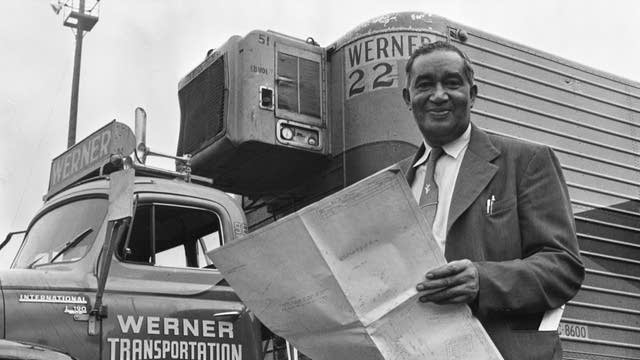
Imagine living in a world where fresh meats, fruits, and vegetables were only accessible during certain seasons and were to be eaten right away to avoid going bad. Before Frederick McKinley Jones, an African American inventor who taught himself, altered the game by creating the first portable refrigeration system for trucks in the 1940s, this was the situation. In addition to revolutionising the food sector, his invention had a significant effect on healthcare and military logistics.
Early Life and Mechanical Ingenuity
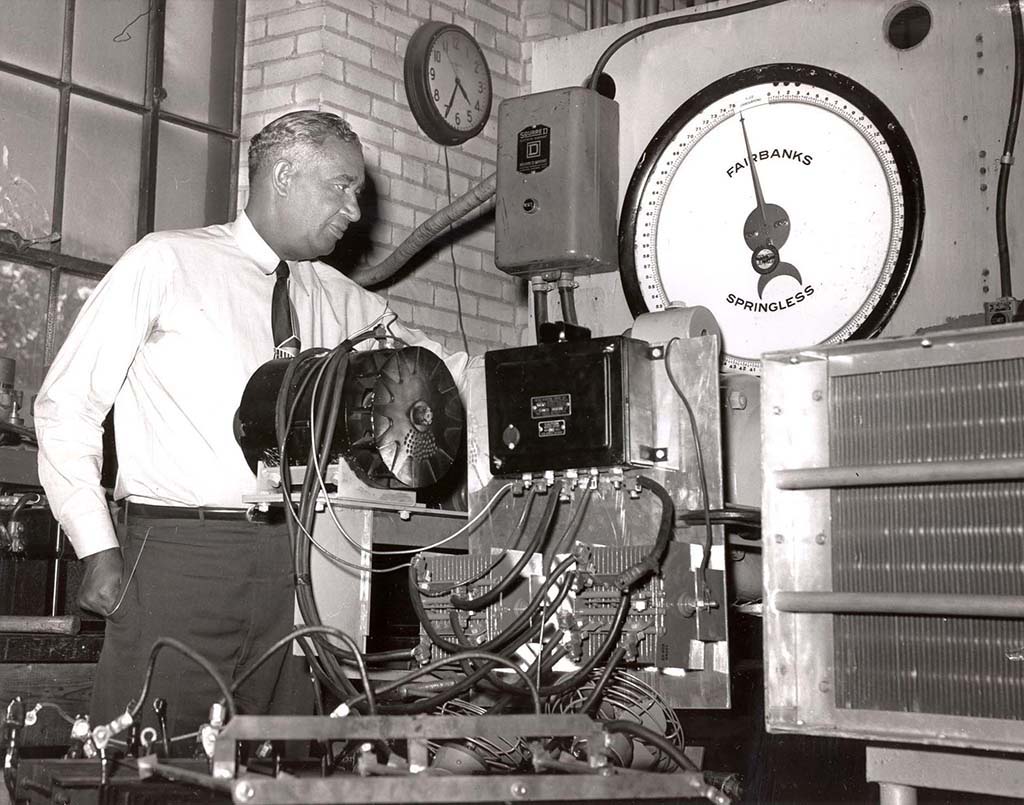
Jones was born in Covington, Kentucky, on May 17, 1893, and experienced hardship at a young age. He was raised by a Catholic priest in Cincinnati, Ohio, following the death of his parents. Jones, who left school early, became passionate about mechanics and taught himself through literature and practical experience.
He was employed as an auto mechanic by the time he was in his teens, which sharpened his mechanical abilities and ignited his creative side.
The Birth of Portable Refrigeration
While employed at Cinema Supplies Inc., owned by Joseph A. Numero, in the 1930s, Jones was entrusted with enhancing motion picture sound equipment. But when Numero asked him to create a refrigeration unit for trucks, he made his biggest contribution. Long-distance perishable commodities transportation was a logistical headache at the time, frequently leading to spoiled goods.
Jones stepped up and created a refrigeration unit that was small, strong, and effective enough to be installed on trucks. He received a patent for this ground-breaking device in 1940, which kept temperatures constant even when travelling by road. This invention changed everything by making it possible to carry perishable goods across long distances safely.
READ ALSO: Garrett Augustus Morgan: The Visionary Inventor Who Revolutionised Public Safety
Founding Thermo King and Global Impact
Jones and Numero co-founded the U.S. Thermo Control Company, which subsequently became Thermo King, after Jones saw the potential of their innovation. The company’s refrigerated units soon became indispensable in a number of industries, such as healthcare, military logistics, and food distribution.
Jones’s refrigeration systems played a critical role in keeping food, medicine, and blood fresh for soldiers serving abroad during World War II. His invention saved many lives by guaranteeing that vital supplies would not go bad while being transported.
Jones’s creation transformed the food sector in addition to the battlefield. It made it possible for supermarkets to carry a greater range of fresh vegetables all year round, regardless of seasonal restrictions. Long-distance perishable goods transportation without spoiling changed consumer expectations and habits.
A Legacy of Innovation
Jones received more than 60 patents during his career, 40 of which were related to refrigeration technology. Among his other innovations were a portable X-ray machine, a movie theatre ticket dispenser, and advancements in motion picture sound equipment.
In 1944, Jones was elected as the first African American to the American Society of Refrigeration Engineers in honour of his efforts. In 1991, he became the first Black American to receive the National Medal of Technology, which he received posthumously.
In conclusion, the basis for contemporary refrigerated transportation was established by Frederick McKinley Jones’s inventiveness and perseverance, which transcended racial boundaries. His innovations were crucial to military and medical logistics in addition to improving the effectiveness of food delivery.