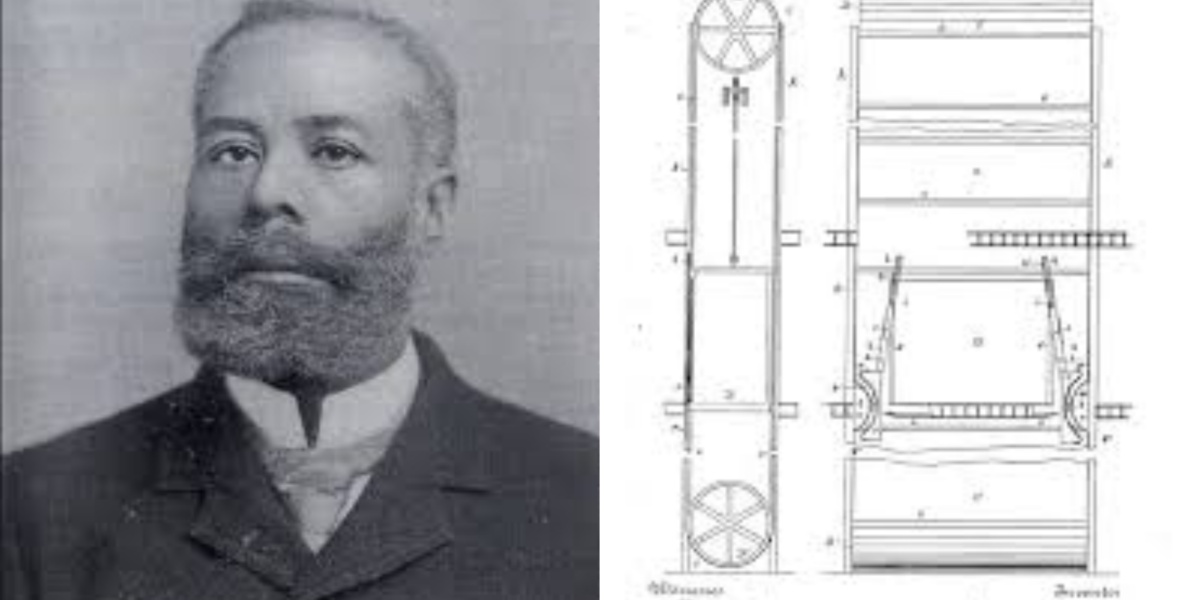
Today, when we enter a lift, the doors open and close without any hesitation, guaranteeing our safety. This commonplace convenience is entirely due to Alexander Miles, whose breakthrough innovation in the late 19th century transformed lift safety.
The Hazardous Elevators of the 1800s
Elevators were a marvel of modern engineering in the 1800s, but they were also very dangerous. Elevator shafts were frequently left uncovered, and doors had to be manually controlled.
Many accidents resulted from people unintentionally walking into exposed shafts as a result of this negligence. Alexander Miles recognised this danger and sought a way to make lifts safer for all users.
Miles’ Ingenious Solution
Alexander Miles came up with a system that made the elevator doors on the car and the shaft open and close automatically. In his idea, a flexible belt that was fastened to the elevator cage interacted with drums that were placed along the elevator shaft.
The belt would activate levers and rollers to open the doors as the elevator arrived at a floor and to close them as it left. This invention greatly decreased the possibility of mishaps involving manual door operations.
Securing the Patent
Miles received U.S. Patent No. 371,207 on October 11, 1887, for his “Improved Method for Opening and Closing Elevators.” His place in the annals of engineering history was solidified by this patent, which also acknowledged his contribution to elevator safety.
Beyond Elevators: Miles’ Legacy
Alexander Miles, who was born in Ohio in 1838, was more than just an inventor. He was a successful barber and businessman. He established The United Brotherhood, a life insurance provider, in 1899 to serve African Americans who were frequently turned away from other providers. His legacy of creativity and social responsibility demonstrated that his dedication to the well-being of the community went beyond his creations.
Honouring a Pioneer
In 2007, Alexander Miles received a posthumous induction into the National Inventors Hall of Fame in honour of his efforts. In addition to revolutionising elevator safety, his work opened the door for further advancements in passenger safety and building design.