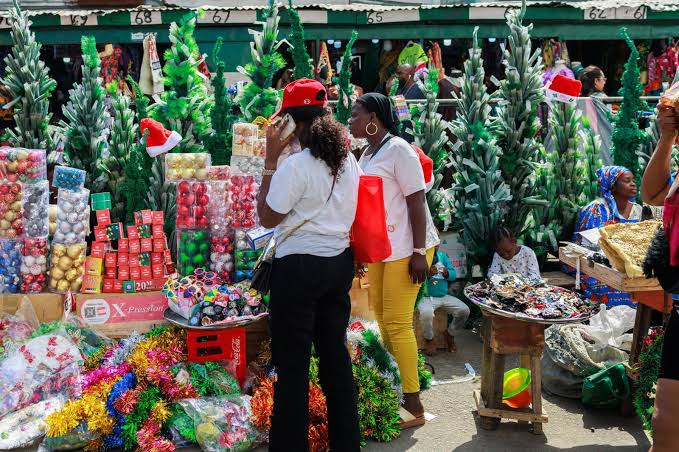
Festive seasons in Nigeria have always been a time of excitement, especially for children.
Growing up, many of us anticipated new Christmas clothes and shoes — gifts from our parents that symbolised love and celebration.
The air was filled with the sound of fireworks, the aroma of special meals, and the buzz of family gatherings.
However, behind the scenes, parents often struggled to afford these festive essentials, a reality many of us came to understand as we grew older.
Today, as adults, we see things from a different perspective. Beyond the joy and celebrations, festive periods come with a harsh reality: the sharp increase in the prices of goods.
For many families, what should be a season of joy becomes one of stress and sacrifice.
But why do prices skyrocket during these festive periods, and what can be done to avoid falling victim to the festive price surge?
The Root Causes of Price Hikes During Festive Periods
1. Demand Outweighs Supply
One of the most basic economic principles is the law of demand and supply. Festive periods bring about a surge in demand for essential goods like food, clothing, and decorations.
Unfortunately, suppliers rarely match this increase with a corresponding boost in production or stock. The result? Prices soar as demand exceeds supply. Traders understand this shift and adjust their prices accordingly.
2. Inflation and Economic Instability
Nigeria’s economy often experiences inflationary pressure, and festive periods only amplify it. Inflation reduces the purchasing power of the naira, making it more expensive to import goods and raw materials.
Consequently, local producers and importers increase prices to maintain profit margins, which trickles down to consumers.
3. Opportunistic Profiteering
Many small-scale traders, artisans, and service providers exploit the festive rush to increase prices. Tailors, for example, charge higher fees for clothes sewn during December, citing “holiday workload” as an excuse.
Chicken sellers, food vendors, and transport operators are also guilty of this practice. While some might argue that it’s part of business survival, others see it as sheer greed.
4. Hoarding of Goods
Traders often hoard essential goods like rice, cooking oil, and beverages, anticipating that demand will rise closer to the festive season.
When supply is intentionally restricted, prices inevitably increase. Hoarding is a deliberate act to maximise profit, and it often happens with perishable and non-perishable goods alike.
5. Lack of Competition and Poor Market Regulation
In a truly competitive market, traders would strive to outdo each other with better prices. Unfortunately, many Nigerian markets operate on informal systems where groups of traders agree to set uniform prices.
Without strong regulatory oversight, this informal “cartel-like” behaviour allows them to inflate prices as they please.
6. Increased Production Costs
Festive periods come with logistical challenges. Import costs, higher transport fees, and the need for overtime pay for factory workers all contribute to the increased cost of production.
These costs are passed on to the final consumer, leading to inflated prices.
7. Weak Public Distribution Systems
Nigeria’s weak supply chain and distribution system make it difficult to stabilise prices. When a system relies heavily on importation and middlemen, prices are subject to fluctuations.
The absence of a centralised or government-backed distribution system means that private players dictate prices.
Is it Just a Nigerian Problem?
While many believe this price surge is peculiar to Nigeria, the reality is that it happens in other African countries too.
In countries like Morocco, Tunisia, and Algeria, prices of local commodities increase significantly during Ramadan, forcing citizens to seek cheaper, smuggled alternatives.
This trend is not unique to Nigeria but reflects a broader issue of weak market regulation across many African economies.
Is It Economics or Pure Greed?
Some argue that economic terms like “inflation,” “demand and supply,” and “production costs” are irrelevant in this discussion.
They claim that the real reason for the festive price hike is greed. According to this view, the local food seller (“Mama Nkechi”), the cow merchant (“Adamu”), and the market women selling tomatoes don’t consider complex economic theories. Instead, they raise prices simply because “people must buy.”
This argument isn’t entirely baseless. For instance, tailors increase sewing charges during December, transport operators hike fares, and even shoe repairers add extra fees.
It seems that during festive periods, every trader becomes a “profiteer,” squeezing as much as possible from each transaction.
How to Avoid the Festive Price Surge
Although price hikes during festive periods may seem unavoidable, there are steps consumers can take to protect their wallets.
1. Buy Early
Don’t wait until December to shop for Christmas items. Purchase non-perishable goods like rice, cooking oil, and beverages in October or early November before prices rise. This same strategy can be applied to clothes and shoes.
2. Plan Ahead
Have a shopping list and stick to it. Avoid impulsive buying, which could lead to overspending. Proper planning allows you to identify essential purchases early and avoid last-minute pressure.
3. Consider Bulk Purchases
Buying in bulk reduces the cost per unit of goods. You can join cooperative societies or community buying groups to share costs and get better deals on essential items.
4. Shop in Wholesale Markets
Avoid smaller retail stores that tend to have higher markups. Instead, visit major wholesale markets where prices are often more competitive.
5. Use Digital Shopping Platforms
E-commerce platforms sometimes offer “Black Friday” or “Christmas sales” in November. Watch for online deals that allow you to purchase items at reduced prices before the festive season kicks in.
Final Thoughts
The festive price surge in Nigeria is a complex issue. While some blame it on basic economic principles like demand and supply, others argue that greed and opportunism play a bigger role. Whatever the case, families bear the brunt of these price hikes, especially those with limited financial resources.
To avoid becoming a victim, early planning, bulk purchasing, and leveraging wholesale or online platforms are essential.
While we may not be able to change the behaviour of traders, we can change how we prepare for festive seasons. After all, Christmas is a time for joy, not for financial stress.