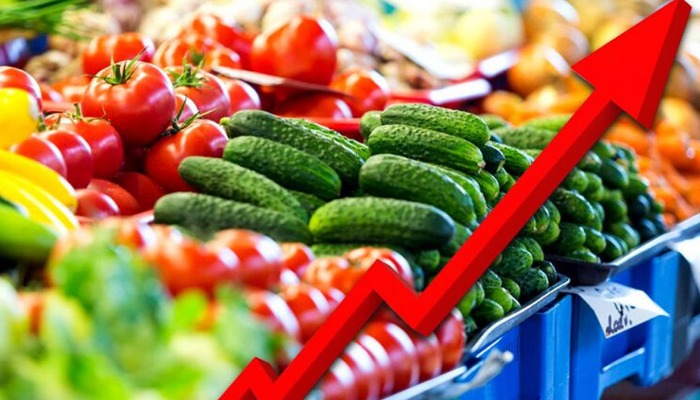
Food inflation increased to 40.66 percent in May, making it harder for Nigerians to feed themselves.
This occurred as the price of food increased by 61%, from 25.25% in June 2023 to 40.66% in May 2024, indicating a consistent increase in the expense of living, as reported by THE PUNCH.
This is based on an examination of the most recent National Bureau of Statistics Consumer Price Index and Inflation data.
The CPI tracks how prices for products and services that people use on a daily basis have changed on average over time.
The NBS revealed on Saturday that headline inflation increased from 33.69 percent in April to 33.95 percent, a change of 0.26 percent.
According to the report, rising food and travel costs caused the inflation rate to reach a 28-year peak not seen since March 1996.
The report stated, “In May 2024, the headline inflation rate increased to 33.95 per cent relative to the April 2024 headline inflation rate which was 33.69 per cent.”
The statistics agency also revealed that, as of May 2024, the top contributors to headline inflation were food and nonalcoholic drinks (17.59%), housing, water and energy (5.68%), petrol and other fuel (5.68%) and apparel and footwear (2.60%).
An analysis of the data revealed that, starting from 25.25 percent in June, food commodity prices increased steadily to 26.98 percent in July, 29.34 percent in August, 30.64 percent in September, 31.52 percent in October, 32.84 percent in November, and 33.93 percent by the end of December 2023.
In January, February, and May, the rate climbed even higher to 35.41 percent, 37.92 percent, 40 percent, and beyond in March, April, and May.
According to NBS, the rate increased by 15.84 percentage points to 40.66 percent in May from 24.82 percent in the same month the previous year.
Items under the categories of bread and cereals (such as semovita, oatflake, yam flour prepackaged, garri, beans, etc.) and potatoes, yam, water yam, etc. (under the category of potatoes, yam, and other tubers) contributed to the annual increase in the food inflation rate.
Additional contributors are the following: beef head, chicken-live, pig head, and bush meat (under meat class); palm oil, vegetable oil, etc. (under oil and fat); stockfish, mudfish, crayfish, etc. (under fish class).
“The food inflation rate in May 2024 was 40.66 per cent on a year-on-year basis, which was 15.84 per cent points higher compared to the rate recorded in May 2023 (24.82 per cent).
“The average annual rate of Food inflation for the twelve months ending May 2024 over the previous twelve-month average was 34.06 per cent, which was 10.41 per cent points increase from the average annual rate of change recorded in May 2023 (23.65 per cent),” the report said.
Similar to this, after registering the highest All-Items Inflation in May 2024, Bauchi, Kogi, and Oyo are the three most expensive states in Nigeria year over year.
According to the research, in May 2024, Bauchi had the highest All-Items inflation rate on a Year-over-Year basis (42.30%), followed by Kogi (32.38%) and Oyo (37.33%).
However, when looking at headline inflation year over year, Borno (25.97%), Benue (27.74%), and Delta (28.67%) had the least rate of increase.
Food costs have increased in Nigeria in recent years. The effects of government initiatives, such the elimination of petrol subsidies, among others, caused the situation to worsen.
Many residents’ purchasing power has been eroded by the rising costs of these necessities and other goods, making it impossible for many households in the nation to afford daily meals.
Olayemi Cardoso, the governor of the Central Bank of Nigeria, stated during the March Monetary Policy Committee meeting that the government’s massive purchases of food as palliatives are a major factor in the nation’s skyrocketing food inflation.
The governor of the CBN observed that despite the interest rate increase in February, inflationary pressure had not decreased.