In recent times, Nigeria has been grappling with a multitude of challenges, both economic and security-related. President Bola Tinubu, in a bid to address these pressing issues, presented the 2023 supplementary budget proposal, which the Nigerian Senate has now approved. This budget not only aims to tackle the prevailing security threats but also focuses on various sectors crucial for the nation’s development. In this comprehensive analysis, we delve into the intricacies of the 2023 Supplementary Budget, highlighting its key allocations and the potential impact it may have on the nation’s future.
Prioritizing National Security
One of the standout features of the 2023 supplementary budget is the prioritization of national security. With a staggering allocation of N476.543 billion, the defense sector has received the highest budget share. This substantial allocation directly responds to the increasing activities of bandits and other criminal elements that have plagued the nation over the past decade. President Tinubu’s commitment to ensuring the safety and security of every Nigerian is evident in this substantial allocation, underlining the importance of defending the nation’s territorial integrity.
Infrastructure and Development
Aside from the significant allocation to defense, the supplementary budget also focuses on critical areas of infrastructure and development. The Works sector received an allocation of N300 billion, reflecting the government’s emphasis on enhancing the nation’s infrastructure. This investment is expected to stimulate economic growth and create jobs, addressing the persistent economic challenges.
The Ministry of Agriculture and Food Security was allocated N200 billion, emphasizing the importance of the agricultural sector in ensuring food security and economic sustainability. This allocation will be crucial in boosting the agricultural industry and reducing the nation’s import dependence.
Housing, with an allocation of N100 billion, is another area of focus, indicating the government’s intent to provide affordable housing solutions to its citizens. Additionally, the Federal Capital Territory Administration received N100 billion, which is vital for the development of the nation’s capital and its infrastructure.
Law Enforcement and Safety
In a country as vast and diverse as Nigeria, law enforcement and safety are of paramount importance. To address this, the supplementary budget allocates N50 billion to Police Commands and Allocation. This allocation will aid in strengthening law enforcement and ensuring the safety of citizens across the nation.
Service Wide Votes and Capital Supplementation
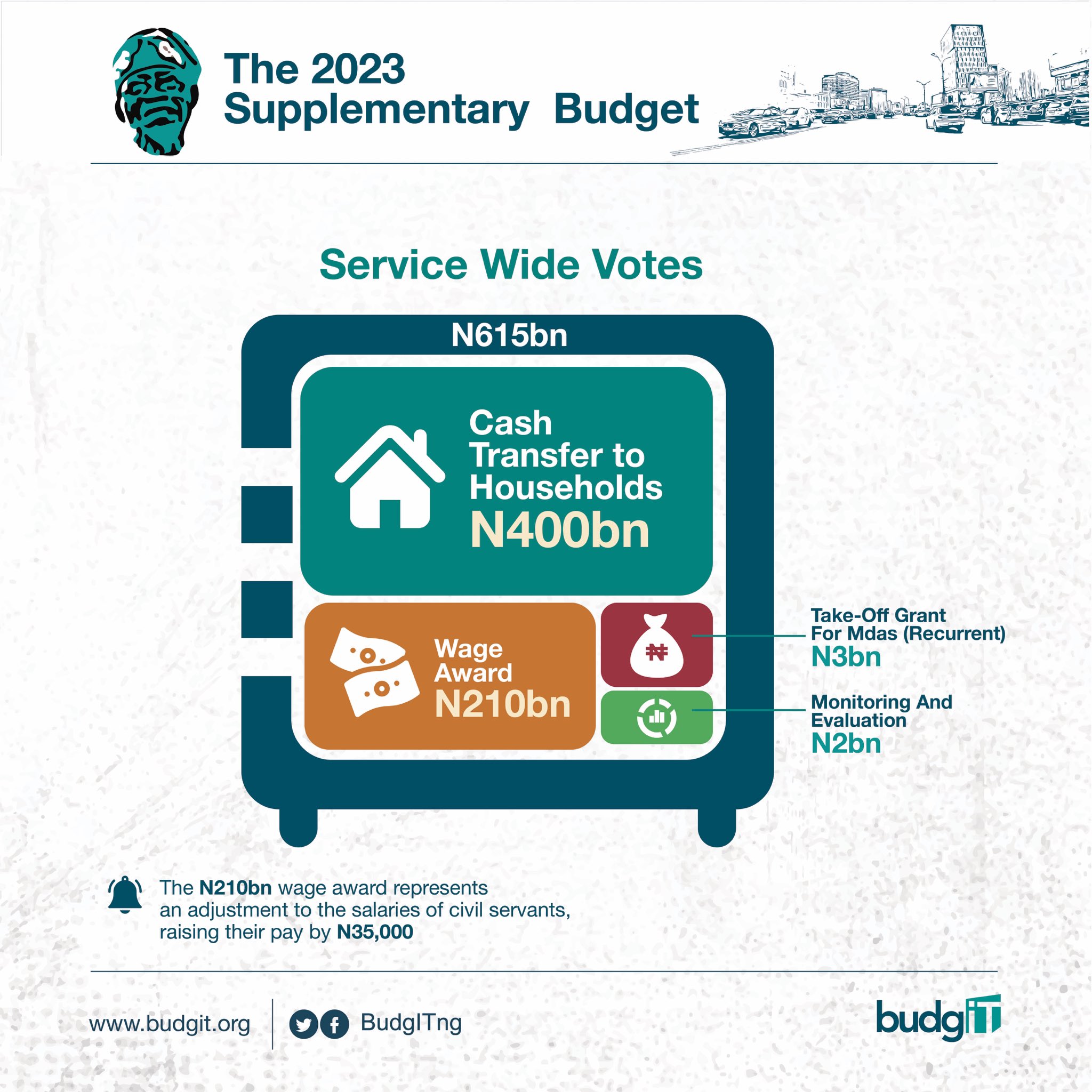
Service Wide Votes, allocated N615 billion, are vital in catering to unforeseen and urgent expenses across various sectors. This flexible allocation allows the government to respond swiftly to unforeseen challenges and emerging needs.
Capital supplementation, with a budget of N210 billion, is another aspect of the budget that contributes to the nation’s development. These funds are typically directed towards capital projects, infrastructure development, and investments that have the potential to yield long-term benefits.
Specific Allocations
The 2023 supplementary budget contains several specific allocations that are worth noting:
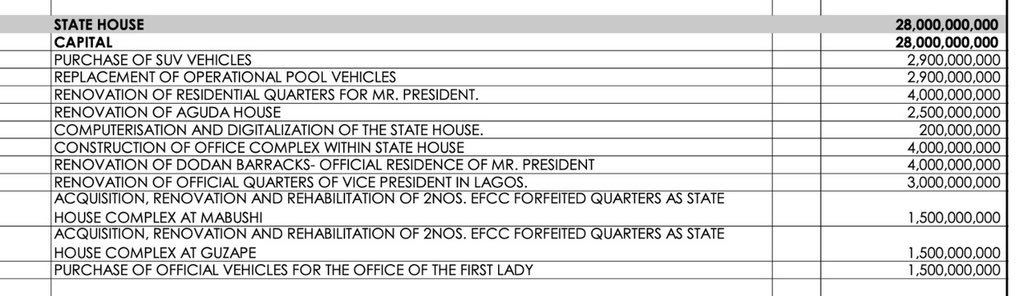
- State House: With a budget of N28 billion, the State House, which serves as the official residence and workplace of the President, has been allocated substantial funds to ensure its efficient functioning and maintenance.
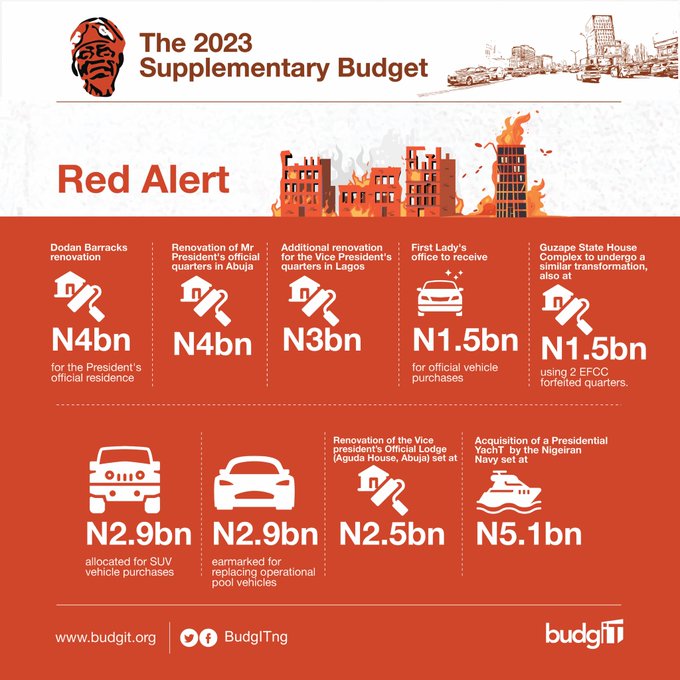
- Renovation of Residential Quarters: N4 billion has been earmarked for the renovation of the residential quarters for President Bola Tinubu. This allocation is essential to maintain the presidential residence in a suitable condition.
- Office of the First Lady: The budget allocates 1.5 billion Naira for the purchase of official vehicles for the Office of the First Lady, highlighting the importance of the First Lady’s role in the nation’s affairs.
- Department of State Services (DSS): With an allocation of N49 billion, the DSS is well-equipped to carry out its responsibilities in safeguarding national security.
- Office of the National Security Adviser: A budget of N29.7 billion has been set aside for the Office of the National Security Adviser, ensuring the coordination of national security efforts.
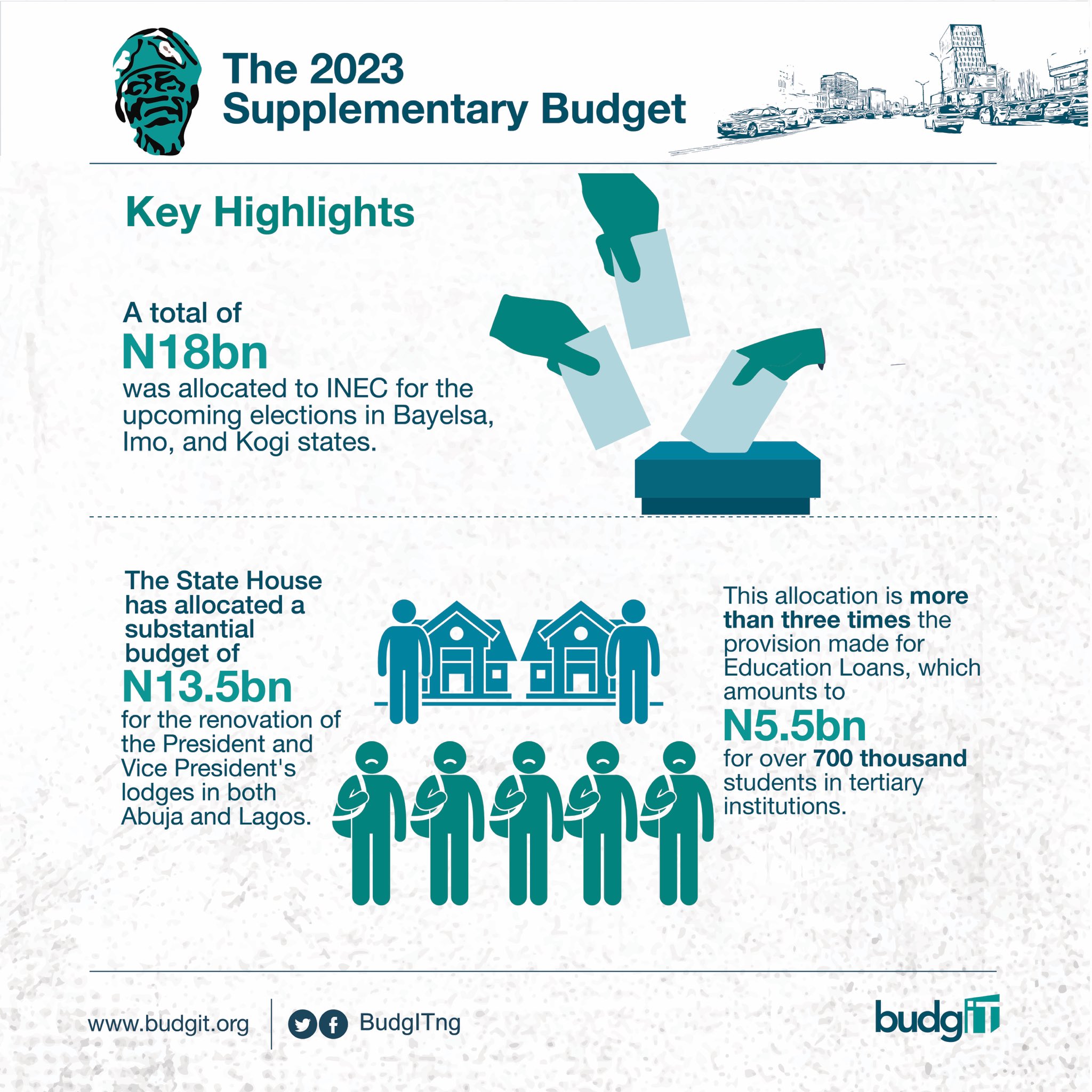
- Independent National Electoral Commission (INEC): An allocation of N18 billion is dedicated to the conduct of the off-cycle governorship election in Bayelsa, Kogi, and Imo States on November 11, further emphasizing the commitment to democracy and electoral processes.
Economic Challenges and Forward Progress
It is important to acknowledge that Nigeria faces significant economic challenges, including inflation, unemployment, and a reliance on oil revenue. President Tinubu’s supplementary budget, while addressing immediate security concerns, also focuses on sectors that have the potential to drive economic growth. Investments in agriculture, infrastructure, and housing can stimulate economic activity and create job opportunities, providing a path to long-term economic stability.
In conclusion, the approval of the 2023 supplementary budget by the Nigerian Senate is a significant step toward addressing the pressing issues facing the nation. By prioritizing national security, infrastructure development, and law enforcement, the government aims to create a safer and more prosperous Nigeria. The specific allocations, including those for the State House, renovation, and the Office of the First Lady, reflect the commitment to efficient governance.
As Nigeria grapples with economic challenges, this budget offers hope for progress and development. The allocation of resources to critical sectors is a testament to the government’s dedication to improving the lives of its citizens and safeguarding the nation’s future.
DATA SOURCE – BudgIT Nigeria